
Travis
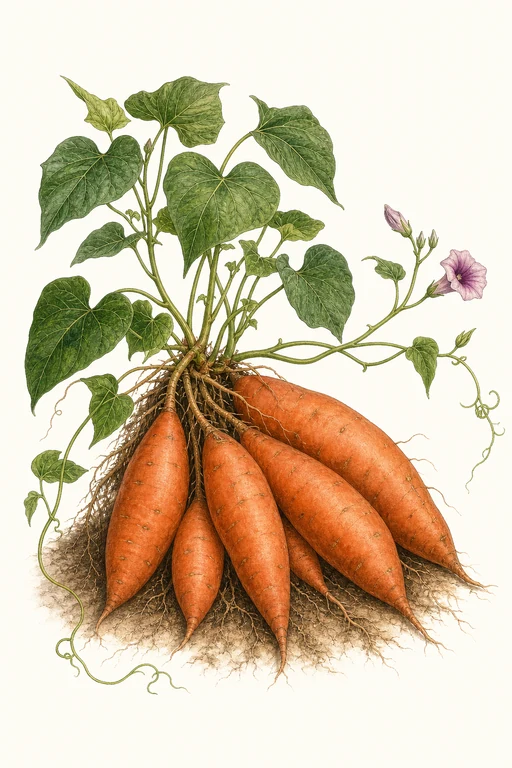
Sun-warmed orange flesh with a velvety, fine-grained bite defines Travis Orange Sweet Potato—sweet, fragrant, and richly colored from the first forkful.
The roots form with a smooth, coppery skin and a dependable, uniform shape, making them a standout for roasting and baking, as well as for velvety mashes and bright, spoonable sauces. Grow Travis for a harvest that feels like autumn in color, with texture that turns tender and luminous when cooked.
Light: Full SunMaturity: 110 DaysHabit: Vine
Planting schedules and alerts are optimized for Columbus (Zone 6b).
Crop Dates
| Milestone | Date |
|---|---|
| Start Indoors | Direct Sow |
| Last Frost | Apr 25th |
| Transplant / Sow Outdoors | May 9th |
| Harvest Begins | Aug 27th |
| Harvest Ends | Oct 16th |
Crop Details
| Trait | Value |
|---|---|
| Days to Maturity | 110 |
| Sun Requirements | Full Sun |
| Growth Habit | Vine |
| Support Needed | Trellis |
| Planting Depth | Normal |
| Germination Temp (°F) | 80 |
| Min Soil Temp (°F) | 65 |
| Min Night Temp (°F) | 55 |
| Harden Off (days) | 10 |
Culinary Notes

Chef's Note
Travis Orange Sweet Potato cooks up with a fine, velvety texture—more spoonable than fluffy—so it shines where you want a luminous purée or a roast that breaks down cleanly. Its candy-sweet aroma loves contrast: salt, acid (lime), and heat from pepper or smoky spice keep it from going one-note.

Best Uses
- high-heat roasting for crisp edges and a soft, pudding-center bite
- velvety mash that stays smooth without turning stringy
- spoonable sweet-potato purée as the base for bright sauces or bowls
- baking into tender cubes for sheet-pan harmony with salty fat

Flavor Profile

Frequently Asked Questions
What pest or disease most often affects Ipomoea batatas (sweet potato), and how can I control it?
How often should I water Ipomoea batatas during the main growing phase?
How do I know when my Ipomoea batatas is ready to harvest?
Sowing Tips

Transplant Conditions
Wait until soil reaches 65°F and nights stay above 55°F before moving outdoors. Harden off for 10 days first.

Direct Sow Preferred
Sensitive roots — does not transplant well. If starting indoors, use biodegradable pots and disturb roots as little as possible when moving outdoors.
Expert Note

Plant certified seed potatoes once soil is workable and cool—hilling as the plants emerge is key to maximizing “jumbo” tuber size.