
Triple Crown
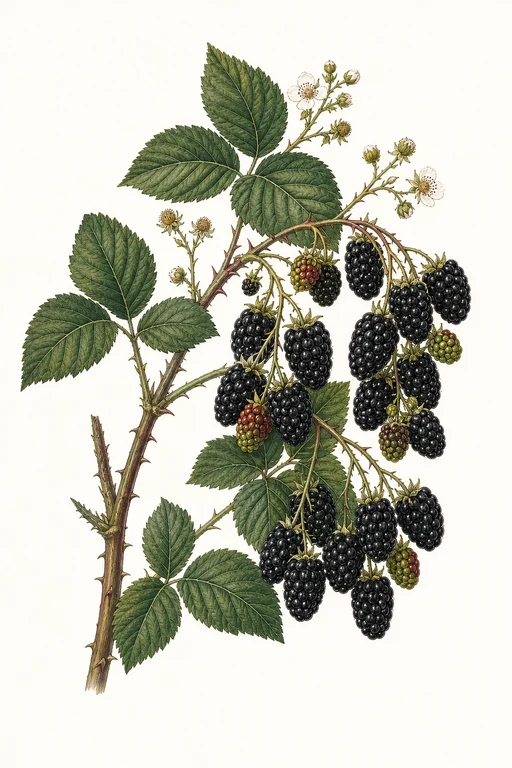
Velvety, inky-black berries of Triple Crown arrive with a lush, sweet-tart perfume and a satisfyingly juicy bite.
The fruit ripens in a steady rhythm on vigorous canes, offering a smooth, near-glossy surface and a tender texture that shines fresh and elevates every preserve. Grow Triple Crown for baskets of deep blackberry flavor—ideal for jam, sauce, and spoonable desserts, with enough richness for pickling-style preserves as well.
Light: Full SunMaturity: 365 DaysHabit: Mounding
Planting schedules and alerts are optimized for Columbus (Zone 6b).
Crop Dates
| Milestone | Date |
|---|---|
| Last Frost | Apr 25th |
| Growing Approach | Protected Environment Only |
Crop Details
| Trait | Value |
|---|---|
| Days to Maturity | 365 |
| Sun Requirements | Full Sun |
| Growth Habit | Mounding |
| Support Needed | Trellis |
| Planting Depth | Normal |
| Germination Temp (°F) | 65 |
| Min Soil Temp (°F) | 50 |
| Min Night Temp (°F) | 40 |
| Harden Off (days) | Not Required |
Culinary Notes

Chef's Note
Triple Crown’s steady sweet-tart balance and tender, juicy berry flesh make it especially good when you want a clean, spoonable result—no gritty texture, no dull finish. It’s the kind of blackberry that performs in a quick jam cook or as a warm sauce, staying glossy even after heat.

Best Uses
- jam with a short cook to hold that velvety, jeweled texture
- blackberry sauce for pancakes, cheesecake, or duck-style warm applications
- spoonable desserts like panna cotta swirl or yogurt compote
- pickling-style blackberry preserves where the fruit stands up to vinegar’s bite

Flavor Profile

Kitchen Pairings
Frequently Asked Questions
What pest or disease commonly affects Rubus fruticosus (triple crown blackberry), and how can I control it?
How often should I water Rubus fruticosus during the main growing season?
How do I tell when triple crown blackberry is ready to harvest?
Sowing Tips

Transplant Conditions
Wait until soil reaches 50°F and nights stay above 40°F before moving outdoors.
Expert Note

Plant crowns/rootstocks in early spring or fall, keep them well-watered the first year, and train canes to a trellis for best fruiting and winter survival.