
Watermelon
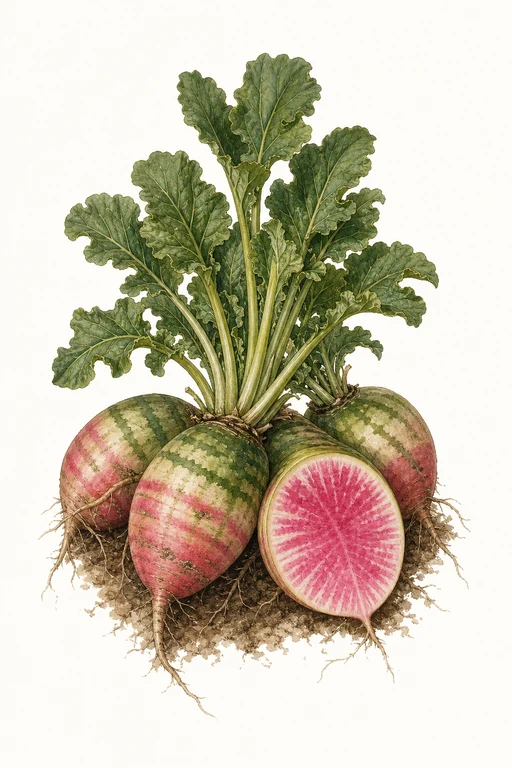
A bold, jewel-toned winter radish with a striking watermelon-like blush—crisp, juicy flesh that stays pleasantly tender as it matures.
Expect a clean, bright radish bite with a gentle sweetness, plus a firm, snap-holding texture that shines in hearty seasonal preparations. Grow Watermelon for its show-stopping color and its dependable 45-day turnaround from sowing to harvest-ready roots.
Light: Full SunMaturity: 45 DaysHabit: Taproot
Planting schedules and alerts are optimized for Columbus (Zone 6b).
Crop Dates
| Milestone | Date |
|---|---|
| Start Indoors | Direct Sow |
| Last Frost | Apr 25th |
| Transplant / Sow Outdoors | Apr 25th |
| Harvest Begins | Jun 9th |
| Harvest Ends | Oct 16th |
Crop Details
| Trait | Value |
|---|---|
| Days to Maturity | 45 |
| Sun Requirements | Full Sun |
| Growth Habit | Taproot |
| Support Needed | None |
| Planting Depth | Normal |
| Germination Temp (°F) | 55 |
| Min Soil Temp (°F) | 40 |
| Min Night Temp (°F) | 30 |
| Harden Off (days) | Not Required |
Culinary Notes

Chef's Note
A winter radish built for contrast: juicy crunch on the first bite, then a mild sweetness that won’t turn harsh when you let it size up. Slice it paper-thin or pickle it—this is the kind of radish that stays lively under acidity and still delivers a clean snap.

Best Uses
- thin-mandoline slices for raw salads that keep their snap
- quick pickles where the blush holds and the bite softens but doesn’t vanish
- shaved onto grain bowls with warm vinaigrette to stay crunchy
- roasted wedges for a sweeter, nutty edge while keeping firm centers

Flavor Profile

Kitchen Pairings
Frequently Asked Questions
What’s a common disease or pest problem for Raphanus sativus (winter radish/watermelon-type radish), and how do I control it?
How often should I water Raphanus sativus during active root growth (around days 15–45)?
How can I tell when Raphanus sativus is ready to harvest at about 45 days?
Sowing Tips

Transplant Conditions
Wait until soil reaches 40°F and nights stay above 30°F before moving outdoors.
Expert Note

For the sweetest mild flavor, keep soil consistently moist and harvest as soon as the roots reach desired size (don’t let them get woody).