
White Egg
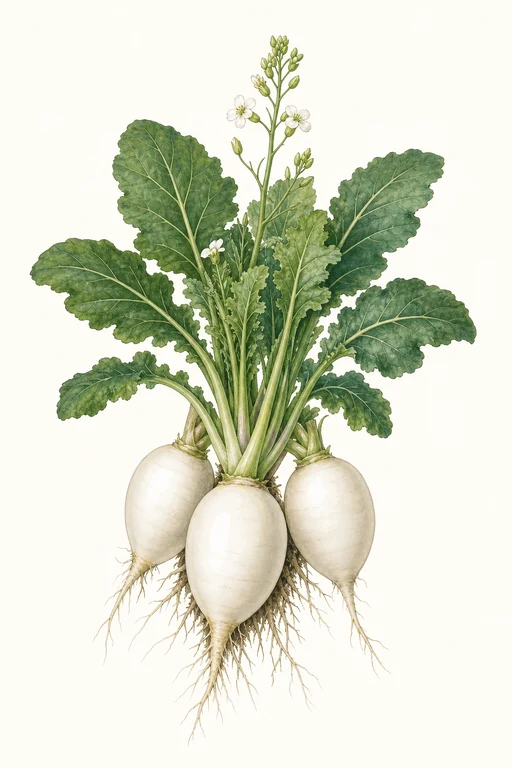
Crisp and luminous at harvest, White Egg turnips form smooth, egg-shaped roots with a clean, snowy-white skin that feels cool and firm in the hand.
The flesh is tender and sweet, with a fine-grained bite that shines whether you enjoy them fresh for salads or warm them until silky for roasting and pan-glazing. Grow White Egg for a tidy, dependable crop—50 days to maturity—ideal for gardeners who want elegant color and reliable flavor from the first pull.
Light: Full SunMaturity: 50 DaysHabit: Rosette
Planting schedules and alerts are optimized for Columbus (Zone 6b).
Crop Dates
| Milestone | Date |
|---|---|
| Start Indoors | Mar 28th |
| Last Frost | Apr 25th |
| Transplant / Sow Outdoors | Apr 25th |
| Harvest Begins | Jun 14th |
| Harvest Ends | Oct 16th |
Crop Details
| Trait | Value |
|---|---|
| Days to Maturity | 50 |
| Sun Requirements | Full Sun |
| Growth Habit | Rosette |
| Support Needed | None |
| Planting Depth | Normal |
| Germination Temp (°F) | 45 |
| Min Soil Temp (°F) | 40 |
| Min Night Temp (°F) | 28 |
| Harden Off (days) | 6 |
Culinary Notes

Chef's Note
White Egg turnips give you that clean, slightly sweet snap raw, but the real party trick is how fast they go silky in heat—great for glazing where the sugars catch without turning bitter. Their fine-grained texture keeps them from getting grainy, so they handle both sharp vinaigrettes and buttery purées cleanly.

Best Uses
- thin raw slices in dressed salads where they stay crisp
- roasting or pan-glazing until edges caramelize and centers go tender
- mash or puree for a smooth, lightly sweet base that doesn’t taste starchy
- quick braises with a splash of stock to keep them from drying out

Flavor Profile

Kitchen Pairings
Frequently Asked Questions
How do I prevent and treat clubroot on Brassica rapa (white egg/turnip-type roots)?
How often should I water Brassica rapa (white egg/turnip-type roots) during the main root-forming phase?
What are the signs that Brassica rapa (white egg/turnip-type roots) is ready to harvest at ~50 days?
Sowing Tips

Transplant Conditions
Wait until soil reaches 40°F and nights stay above 28°F before moving outdoors. Harden off for 6 days first.
Expert Note

For sweet, tender roots, keep soil evenly moist and avoid letting plants bolt by maintaining cool growing conditions.