
White Yam
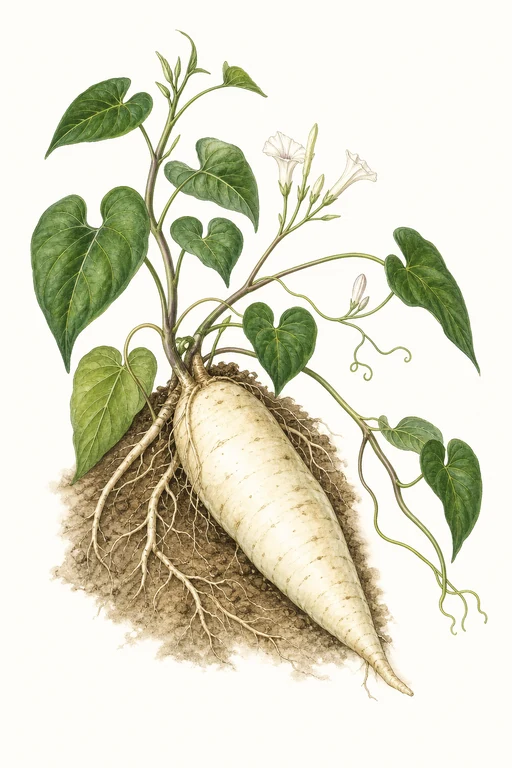
Silken-smooth flesh emerges in a luminous white that feels almost pearlescent in the garden—sweet, mellow, and quietly aromatic when grown to maturity.
White Yam forms an even, tapered root with a creamy interior and a tender, velvety texture that shines in roasted wedges, mashed bowls, and comforting purees, with its naturally balanced sweetness also lending itself beautifully to soups and gratins. For home gardeners, it’s a standout harvest: clean-looking, richly flavored, and made for turning everyday meals into something special.
Light: Full SunMaturity: 90 DaysHabit: Vine
Planting schedules and alerts are optimized for Columbus (Zone 6b).
Crop Dates
| Milestone | Date |
|---|---|
| Start Indoors | Direct Sow |
| Last Frost | Apr 25th |
| Transplant / Sow Outdoors | Apr 25th |
| Harvest Begins | Jul 24th |
| Harvest Ends | Oct 16th |
Crop Details
| Trait | Value |
|---|---|
| Days to Maturity | 90 |
| Sun Requirements | Full Sun |
| Growth Habit | Vine |
| Support Needed | None |
| Planting Depth | Normal |
| Germination Temp (°F) | 75 |
| Min Soil Temp (°F) | 65 |
| Min Night Temp (°F) | 55 |
| Harden Off (days) | Not Required |
Culinary Notes

Chef's Note
This white-market sweet potato is all about creamy, almost custardy texture with a restrained sweetness—so it rewards heat that caramelizes the outside while keeping the center plush. It stands up to rich fats like butter or coconut but stays clean when you cut it with citrus or spice.

Best Uses
- roasted wedges (high-heat for caramelized edges; tender center)
- silky mash or purée with butter and salt
- thick, comforting soups for body without heaviness
- baked gratin layers with cream or coconut milk

Flavor Profile

Kitchen Pairings
Frequently Asked Questions
What pest or disease commonly affects Ipomoea batatas (white yam) and how can I manage it?
How often should I water Ipomoea batatas during the main growing phase?
How do I tell when white yam (Ipomoea batatas) is ready to harvest?
Sowing Tips

Transplant Conditions
Wait until soil reaches 65°F and nights stay above 55°F before moving outdoors.
Expert Note

Plant slips after soil is reliably warm and keep the ground consistently moist during establishment, then taper watering to support tuber bulking.