
White
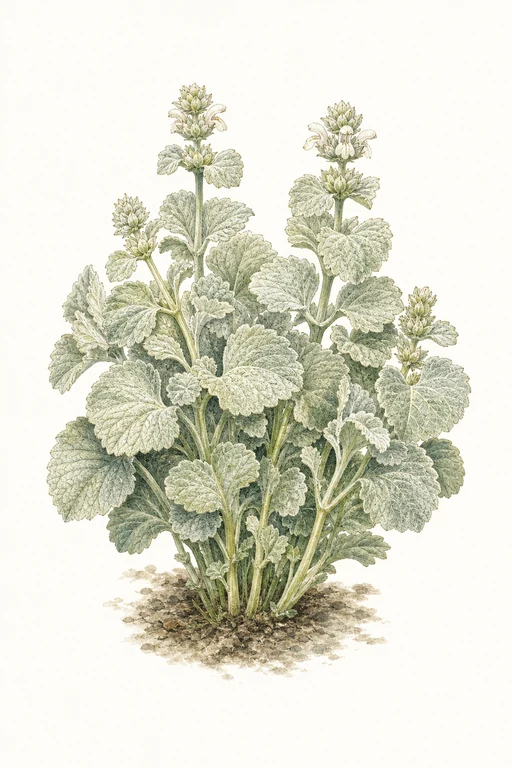
Softly luminous and unmistakably aromatic, White horehound forms a silvery, downy show of leaves that release a cool, herbal fragrance when brushed.
At maturity, the foliage is crisp-textured and pleasantly bitter, ideal for crafting distinctive horehound preparations and for steeping into aromatic infusions. Grow it for its bold, old-fashioned character—an easy, resilient herb that rewards the senses from the first sprig to the full, silvery canopy at about 60 days.
Light: Full SunMaturity: 60 DaysHabit: Upright
Planting schedules and alerts are optimized for Columbus (Zone 6b).
Crop Dates
| Milestone | Date |
|---|---|
| Start Indoors | Mar 28th |
| Last Frost | Apr 25th |
| Transplant / Sow Outdoors | Apr 25th |
| Harvest Begins | Jun 24th |
| Harvest Ends | Oct 16th |
Crop Details
| Trait | Value |
|---|---|
| Days to Maturity | 60 |
| Sun Requirements | Full Sun |
| Growth Habit | Upright |
| Support Needed | None |
| Planting Depth | Normal |
| Germination Temp (°F) | 70 |
| Min Soil Temp (°F) | 45 |
| Min Night Temp (°F) | 35 |
| Harden Off (days) | 7 |
Culinary Notes

Chef's Note
White horehound brings a clean, old-school bitterness with a cool herbal aroma that stands up to heat—perfect when you want the bitterness to stay front and center. It’s crisp enough for steeping and boiling, and honey or citrus is the bridge that keeps it drinkable and candy-worthy.

Best Uses
- steeped bitter-herb infusion for warming drinks
- horehound candy syrup base (boiled down until syrupy)
- drying for herbal bitters and tea blends
- chopped leaves folded into sharp, vinegar-forward sauces

Flavor Profile

Kitchen Pairings
Frequently Asked Questions
What pest or disease commonly affects Marrubium vulgare (white/marrubium), and how can I control it?
How often should I water Marrubium vulgare during its main growth phase?
How do I know when Marrubium vulgare is ready to harvest?
Sowing Tips

Transplant Conditions
Wait until soil reaches 45°F and nights stay above 35°F before moving outdoors. Harden off for 7 days first.
Expert Note

Horehound is drought-tolerant once established—start seeds indoors for an earlier plant, then let it grow undisturbed for strong, bitter foliage.