
Wilhelmsburger
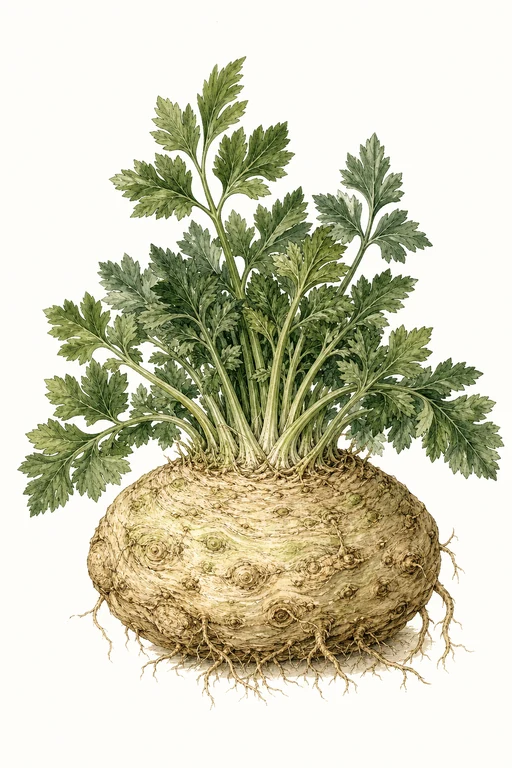
Sweet, nutty celeriac—Wilhelmsburger—forms a broad, turnip-like crown with a clean, creamy interior that feels wonderfully dense and smooth.
Its flavor is gently savory with a delicate celery brightness, and the texture stays firm and velvety from harvest through storage. Grow it for elegant roasts, silky purées, and fragrant gratins, or shave it fresh for crisp salads and bright, aromatic slaws.
Light: Full SunMaturity: 110 DaysHabit: Upright
Planting schedules and alerts are optimized for Columbus (Zone 6b).
Crop Dates
| Milestone | Date |
|---|---|
| Start Indoors | Feb 14th |
| Last Frost | Apr 25th |
| Transplant / Sow Outdoors | Apr 18th |
| Harvest Begins | Aug 6th |
| Harvest Ends | Oct 16th |
Crop Details
| Trait | Value |
|---|---|
| Days to Maturity | 110 |
| Sun Requirements | Full Sun |
| Growth Habit | Upright |
| Support Needed | None |
| Planting Depth | Normal |
| Germination Temp (°F) | 70 |
| Min Soil Temp (°F) | 40 |
| Min Night Temp (°F) | 28 |
| Harden Off (days) | 6 |
Culinary Notes

Chef's Note
Wilhelmsburger celeriac has that creamy, dense interior that purées into a smooth, spoon-thick texture without getting grainy. Use it when you want celery brightness paired with a nutty sweetness—roast or gratin it until browned at the edges, or shave it raw for a clean, crisp bite under sharp dressing.

Best Uses
- silky purée—steam until tender, then blend with butter/cream for a tight, creamy spoon-coating texture
- elegant roast wedges or batons where the surface caramelizes but the center stays firm
- fragrant gratin—slice thin and bake until creamy-golden without turning woolly
- raw shave for crisp salads and sharp slaw when dressed lightly to stay snappy

Flavor Profile

Kitchen Pairings
Frequently Asked Questions
How do I manage celery root (Apium graveolens var. rapaceum) problems like early blight/leaf spot?
How often should I water celery root during the main growing phase?
When is Wilhelmsburger (Apium graveolens var. rapaceum) ready to harvest?
Sowing Tips

Transplant Conditions
Wait until soil reaches 40°F and nights stay above 28°F before moving outdoors. Harden off for 6 days first.
Expert Note

Start celeriac early indoors and transplant once nights are reliably above freezing, then “earth up” around the bulb as it enlarges for a clean, firm shape.