
Willowleaf
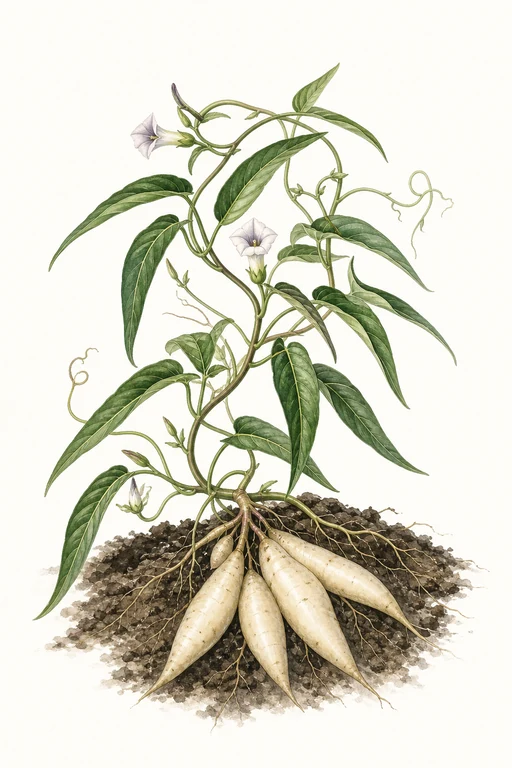
Silky, creamy flesh with a gentle sweetness—Willowleaf White Sweet Potato develops into a pale, elegant tuber that roasts to a tender, spoon-melting texture and shines in simple preparations.
Its clean, light-colored skin and uniform shape make it a favorite for home gardeners seeking reliable harvests around 90 days, with roots that hold their appeal from garden to serving. Grow Willowleaf for a refined, mellow flavor that’s especially lovely for roasting and for velvety sauces and purées.
Light: Full SunMaturity: 90 DaysHabit: Vine
Planting schedules and alerts are optimized for Columbus (Zone 6b).
Crop Dates
| Milestone | Date |
|---|---|
| Start Indoors | Direct Sow |
| Last Frost | Apr 25th |
| Transplant / Sow Outdoors | Apr 25th |
| Harvest Begins | Jul 24th |
| Harvest Ends | Oct 16th |
Crop Details
| Trait | Value |
|---|---|
| Days to Maturity | 90 |
| Sun Requirements | Full Sun |
| Growth Habit | Vine |
| Support Needed | None |
| Planting Depth | Normal |
| Germination Temp (°F) | 75 |
| Min Soil Temp (°F) | 65 |
| Min Night Temp (°F) | 55 |
| Harden Off (days) | 7 |
Culinary Notes

Chef's Note
Willowleaf’s white, silky flesh turns buttery and almost custard-soft when roasted, so it behaves beautifully in purées and thick soups without needing heavy add-ins. Keep flavors restrained—pair with browned butter, sage, and a squeeze of citrus to wake up the mild sweetness instead of overpowering it.

Best Uses
- hot-roast wedges or cubes until spoon-tender and lightly bronzed
- velvety purées (pass through a ricer for that cloudlike texture)
- thick soups or chowders where it naturally suspends the body
- buttery mash-style sides that don’t need aggressive seasoning

Flavor Profile

Kitchen Pairings
Frequently Asked Questions
What pest or disease most commonly affects Ipomoea batatas (willowleaf sweet potato), and how can I manage it?
How often should I water willowleaf sweet potato during the main growing phase?
How do I tell when Ipomoea batatas (willowleaf sweet potato) is ready to harvest?
Sowing Tips

Transplant Conditions
Wait until soil reaches 65°F and nights stay above 55°F before moving outdoors. Harden off for 7 days first.
Expert Note

Plant willowleaf tubers outdoors only after soil has warmed; keep soil consistently moist until shoots emerge, then water regularly to size the tubers.