
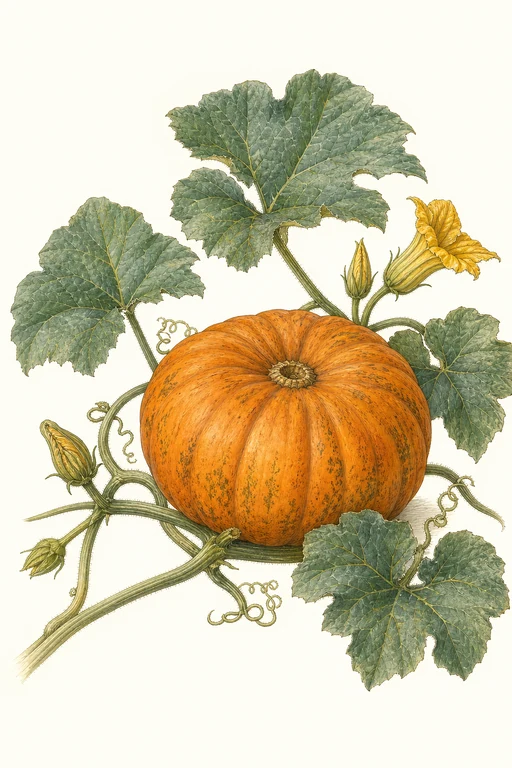
Winter Luxury
Sink your spoon into Winter Luxury’s velvety, deep-orange flesh—sweet, mellow, and richly aromatic, with a fine-grained texture that turns luxuriously smooth.
This pie pumpkin forms substantial, well-balanced fruits with sturdy rinds that store with confidence, bringing dependable flavor from late season into winter. Grow it for classic pie fillings and comforting baked preparations, where its dense, spoonable interior shines with a golden, custard-ready finish.
Light: Full SunMaturity: 95 DaysHabit: Vine
Location not set yet
Location not set yet
Enter your ZIP for local crop dates
Winter Luxury Planting Dates by USDA Zone
Estimated US hardiness-zone windows for sow, transplant, and harvest. Enter a US ZIP above for exact local dates, or open a zone below.
| Zone | Start Indoors | Sow / Transplant | Harvest |
|---|---|---|---|
| Zone 1a | Protected Environment Only | ||
| Zone 1b | Protected Environment Only | ||
| Zone 2a | May 11th | Jun 8th | Sep 11th – Aug 29th |
| Zone 2b | May 1st | May 29th | Sep 1st – Aug 25th |
| Zone 3a | May 1st | May 29th | Sep 1st – Sep 1st |
| Zone 3b | May 5th | Jun 2nd | Sep 5th – Sep 21st |
| Zone 4a | May 1st | May 29th | Sep 1st – Sep 24th |
| Zone 4b | Apr 29th | May 27th | Aug 30th – Sep 27th |
| Zone 5a | Apr 24th | May 22nd | Aug 25th – Sep 30th |
| Zone 5b | Apr 20th | May 18th | Aug 21st – Oct 5th |
| Zone 6a | Apr 17th | May 15th | Aug 18th – Oct 10th |
| Zone 6b | Apr 11th | May 9th | Aug 12th – Oct 16th |
| Zone 7a | Apr 6th | May 4th | Aug 7th – Oct 20th |
| Zone 7b | Mar 27th | Apr 24th | Jul 28th – Oct 28th |
| Zone 8a | Mar 18th | Apr 15th | Jul 19th – Nov 5th |
| Zone 8b | Mar 9th | Apr 6th | Jul 10th – Nov 12th |
| Zone 9a | Feb 20th | Mar 20th | Jun 23rd – Nov 26th |
| Zone 9b | Jan 26th | Feb 23rd | May 29th – Dec 9th |
| Zone 10a | Continuous Production | ||
| Zone 10b | Continuous Production | ||
| Zone 11a | Continuous Production | ||
| Zone 11b | Continuous Production | ||
| Zone 12a | Continuous Production | ||
| Zone 12b | Continuous Production | ||
| Zone 13a | Continuous Production | ||
| Zone 13b | Continuous Production | ||
Crop Details
| Trait | Value |
|---|---|
| Days to Maturity | 95 |
| Sun Requirements | Full Sun |
| Growth Habit | Vine |
| Support Needed | Trellis |
| Planting Depth | Normal |
| Germination Temp (°F) | 70 |
| Min Soil Temp (°F) | 65 |
| Min Night Temp (°F) | 55 |
| Harden Off (days) | 12 |
Culinary Notes

Chef's Note
Winter Luxury gives you a fine-grained, custard-friendly interior that bakes up smooth instead of watery—ideal for pie and thick puree. Its mellow sweetness plays especially well with warm spices and browned fats, where the aroma blooms without turning candy-like.

Best Uses
- classic pie and custard fillings (baked until silky)
- puree for smooth soups that cling to the spoon
- roasted wedges that caramelize at the edges
- creamy mash for autumn sides with butter and sage

Flavor Profile

Frequently Asked Questions
How do I manage powdery mildew on Cucurbita maxima (winter squash) in humid weather?
How often should I water Cucurbita maxima during active vine and fruit growth?
When is Cucurbita maxima ready to harvest for best flavor and storage?
Sowing Tips

Transplant Conditions
Wait until soil reaches 65°F and nights stay above 55°F before moving outdoors. Harden off for 12 days first.

Direct Sow Preferred
Sensitive roots — does not transplant well. If starting indoors, use biodegradable pots and disturb roots as little as possible when moving outdoors.
Expert Note

Start seeds indoors only if you must; for pumpkins like 'Winter Luxury', warmer soil and minimal root disturbance are the keys to getting smooth, sweet custard results.