
Yamato Sanjaku
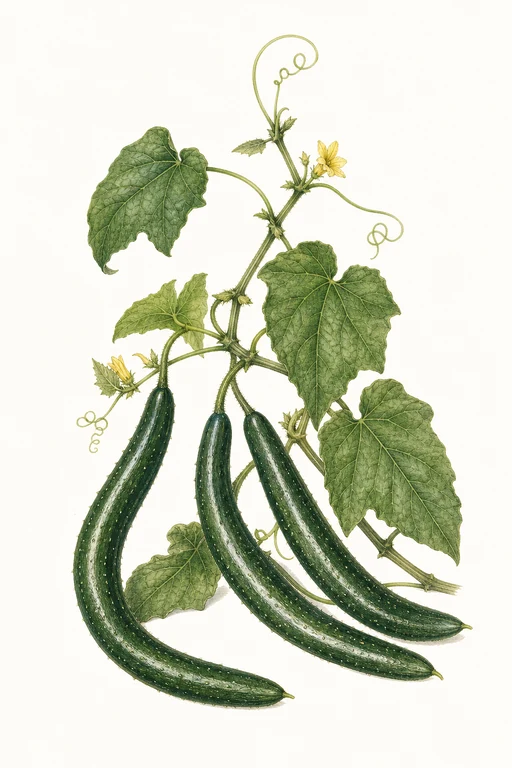
Crisp and cool from the first bite, Yamato Sanjaku delivers a bright, clean cucumber flavor with a delicately sweet snap and a lightly seedy, tender interior.
Its long, slender fruit—finished with a glossy, dark green skin—stays crisp and refreshing as it matures in about 55 days, making it a standout for fresh slicing and vibrant Asian-style salads. Grow it for its elegant shape and dependable texture, ideal for quick pickling and bright, tangy sauces where a crisp bite is everything.
Light: Full SunMaturity: 55 DaysHabit: Vine
Crop Dates : 9a
| Milestone | Date |
|---|---|
| Start Indoors | Feb 27th |
| Last Frost | Mar 6th |
| Transplant / Sow Outdoors | Mar 13th |
| Harvest Begins | May 7th |
| Harvest Ends | Nov 26th |
Crop Details
| Trait | Value |
|---|---|
| Days to Maturity | 55 |
| Sun Requirements | Full Sun |
| Growth Habit | Vine |
| Support Needed | Trellis |
| Planting Depth | Normal |
| Germination Temp (°F) | 70 |
| Min Soil Temp (°F) | 65 |
| Min Night Temp (°F) | 55 |
| Harden Off (days) | 10 |
Culinary Notes

Chef's Note
This Asian cucumber leans hard into crisp, watery crunch with a sweet-leaning snap, so treat it like a texture ingredient rather than a background veg. It holds up in quick pickle brines and stays lively in thin-sliced salads—if you dress it gently and fast, it won’t collapse.

Best Uses
- thin Asian-style salad slicing where it stays snappy under light dressing
- quick pickles—short brine to keep the skin crisp and the center from softening
- cool tangy sauces (yogurt or vinegar-based) that benefit from juicy, refreshing texture
- fresh snacking slices with salt and a squeeze of citrus

Flavor Profile

Kitchen Pairings
Frequently Asked Questions
What’s the most common cucumber disease problem for Cucumis sativus, and how can I prevent and treat it?
How often should I water Cucumis sativus during the main growing phase?
How do I know when Yamato Sanjaku (Cucumis sativus) is ready to harvest?
Sowing Tips

Transplant Conditions
Wait until soil reaches 65°F and nights stay above 55°F before moving outdoors. Harden off for 10 days first.

Direct Sow Preferred
Sensitive roots — does not transplant well. If starting indoors, use biodegradable pots and disturb roots as little as possible when moving outdoors.
Expert Note

For crisp, pickling-ready fruit, keep soil evenly moist and harvest frequently once they reach the desired size.