
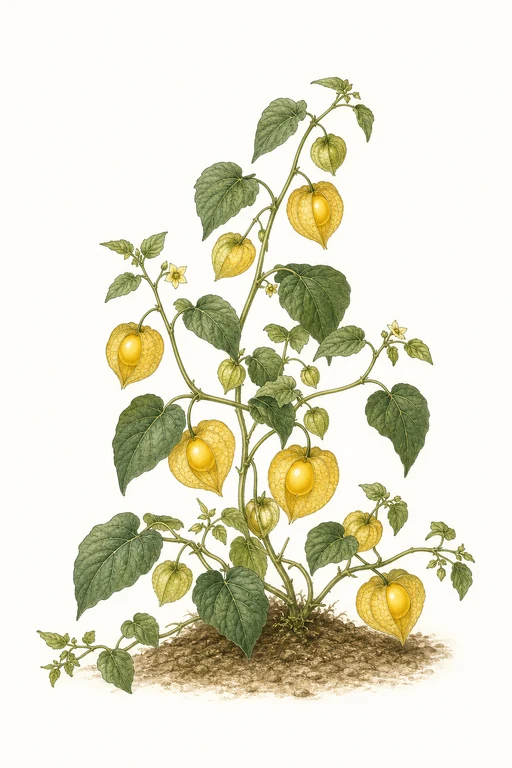
Yellow Husk Cherry
Sunlit, honey-amber berries nest inside papery husks that glow like lanterns—sweet-tart and vividly aromatic with a soft, juicy bite.
Yellow Husk Cherry fruit ripens over a long season, building a playful harvest of tender, custard-like flesh that’s as delightful straight from the plant as it is for spoonable sauces, preserves, and bright pickling-style accents. Grow it for its ornamental charm and its flavor-forward, garden-to-table appeal—each husk a promise of golden flavor at maturity.
Light: Full SunMaturity: 75 DaysHabit: Indeterminate
Planting schedules and alerts are optimized for Columbus (Zone 6b).
Crop Dates
| Milestone | Date |
|---|---|
| Start Indoors | Mar 14th |
| Last Frost | Apr 25th |
| Transplant / Sow Outdoors | Jun 20th |
| Harvest Begins | Sep 3rd |
| Harvest Ends | Oct 16th |
Crop Details
| Trait | Value |
|---|---|
| Days to Maturity | 75 |
| Sun Requirements | Full Sun |
| Growth Habit | Indeterminate |
| Support Needed | Stake |
| Planting Depth | Normal |
| Germination Temp (°F) | 75 |
| Min Soil Temp (°F) | 60 |
| Min Night Temp (°F) | 50 |
| Harden Off (days) | 7 |
Culinary Notes

Chef's Note
These yellow husk cherries go from snappy-tart to custard-soft as they fully amber, so they’re at their best when served cool or barely warmed—no need to bully the flavor. Use them like a fruit preserve in the middle of a dish: their aromatic acidity turns rich fats (pork, chocolate, cheese) into something clean and lively.

Best Uses
- eat straight or as a spoonable snack—cold fruit tastes like sweet citrus jam
- stir into warm porridge or yogurt for a tangy, jammy pop
- cook down into a quick preserves-style sauce with lemon to keep it bright
- quick quick-pickle style garnish—tart, glossy, and great against salty foods

Flavor Profile

Kitchen Pairings
Frequently Asked Questions
What pest or disease commonly affects Physalis philadelphica (yellow husk cherry), and what should I do?
How often should I water yellow husk cherry during the main growing phase?
How can I tell when Physalis philadelphica is ready to harvest?
Sowing Tips

Transplant Conditions
Wait until soil reaches 60°F and nights stay above 50°F before moving outdoors. Harden off for 7 days first.
Expert Note

Grow it like a tomato—start indoors early, transplant only when nights are reliably warm, and let plants fill out for better fruit set under floating row cover early on if needed.