
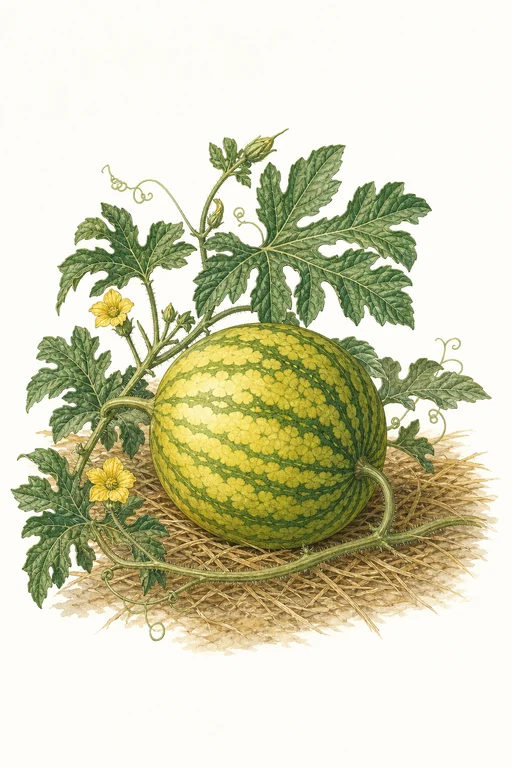
Yellow Jubilee
Sink your senses into Yellow Jubilee’s sunlit flesh—golden-yellow, richly aromatic, and sweet with a clean, juicy snap that feels like summer light.
The rind is classic picnic-ready, holding its shape with a sturdy, medium-thick bite, while the interior stays tender and vibrant from first slice to last. Grow Yellow Jubilee for showy, crowd-pleasing fruit that shines in fresh displays and makes a striking centerpiece for summer gatherings.
Light: Full SunMaturity: 85 DaysHabit: Vine
Planting schedules and alerts are optimized for Columbus (Zone 6b).
Crop Dates
| Milestone | Date |
|---|---|
| Start Indoors | Apr 11th |
| Last Frost | Apr 25th |
| Transplant / Sow Outdoors | Apr 25th |
| Harvest Begins | Jul 19th |
| Harvest Ends | Oct 16th |
Crop Details
| Trait | Value |
|---|---|
| Days to Maturity | 85 |
| Sun Requirements | Full Sun |
| Growth Habit | Vine |
| Support Needed | Trellis |
| Planting Depth | Normal |
| Germination Temp (°F) | 70 |
| Min Soil Temp (°F) | 70 |
| Min Night Temp (°F) | 55 |
| Harden Off (days) | 10 |
Culinary Notes

Chef's Note
A picnic watermelon built for the first bite—Yellow Jubilee’s firm, juicy crunch stays snappy even when it’s been sitting out, so you want it dressed lightly and served cold. Its golden honeyed sweetness plays best with acid (lime) and salty, funky partners (feta or prosciutto) rather than heavy sauces.

Best Uses
- cold slices with flaky salt and lime zest
- centerpiece melon platters with hard cheese and cured meat
- quick-pulse salsa for grilled shrimp or fish tacos
- ice-cold blending for sorbet-like granita

Flavor Profile

Kitchen Pairings
Frequently Asked Questions
What pest or disease most commonly affects Citrullus lanatus (watermelon), and how can I prevent it?
How often should I water Citrullus lanatus during the main growing phase?
How do I tell when my Citrullus lanatus (Yellow Jubilee watermelon) is ready to harvest?
Sowing Tips

Transplant Conditions
Wait until soil reaches 70°F and nights stay above 55°F before moving outdoors. Harden off for 10 days first.

Direct Sow Preferred
Sensitive roots — does not transplant well. If starting indoors, use biodegradable pots and disturb roots as little as possible when moving outdoors.
Expert Note

Warm the soil thoroughly before planting and keep moisture steady until vines establish to improve sweetness and fruit set.