
Yellow Spanish
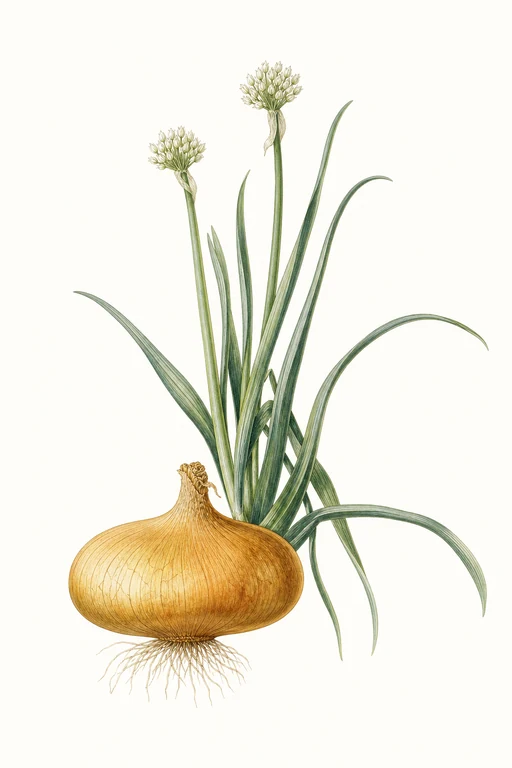
Sunlit and bold, Yellow Spanish onions bring a bright, golden skin that glows even before you peel—firm, crisp layers promising a sharp, lively bite.
At maturity they form generously sized bulbs with a classic flattened-oval silhouette and a dry, papery outer coat that stores beautifully. Grow Yellow Spanish for reliable harvests and for standout flavor in bold, slow-simmered sauces, roasting, and savory pickling preparations.
Light: Full SunMaturity: 110 DaysHabit: Bulbing
Crop Dates : 12a
| Milestone | Date |
|---|---|
| Climate | Frost-Free Climate |
| Growing Approach | Continuous Production |
Crop Details
| Trait | Value |
|---|---|
| Days to Maturity | 110 |
| Sun Requirements | Full Sun |
| Growth Habit | Bulbing |
| Support Needed | None |
| Planting Depth | Normal |
| Germination Temp (°F) | 70 |
| Min Soil Temp (°F) | 55 |
| Min Night Temp (°F) | 28 |
| Harden Off (days) | Not Required |
Culinary Notes

Chef's Note
Yellow Spanish onions lean assertive at first bite, then go sweet as they cook, making them ideal for long reduction where their structure turns silky without turning to mush. Roast or simmer them and you’ll get browned, golden edges plus a steady aromatic backbone that holds up against rich meats and tangy acids.

Best Uses
- slow-simmered sauces and braises where the onions melt into body
- roasted wedges that brown at the edges while staying pleasantly toothsome
- savory pickling for a crisp, tangy bite
- caramelized onions (aim for deep gold rather than jammy brown)

Flavor Profile

Kitchen Pairings
Frequently Asked Questions
What pest or disease most commonly affects Allium cepa (yellow Spanish onion), and how can I treat it?
How often should I water yellow Spanish onions during the main growing phase?
How do I tell when yellow Spanish onions are ready to harvest?
Sowing Tips

Transplant Conditions
Wait until soil reaches 55°F and nights stay above 28°F before moving outdoors.
Expert Note

For northern success, transplant young starts into cool soil early, and stop fertilizing nitrogen once bulbs begin to form to keep them sizing up instead of staying leafy.