
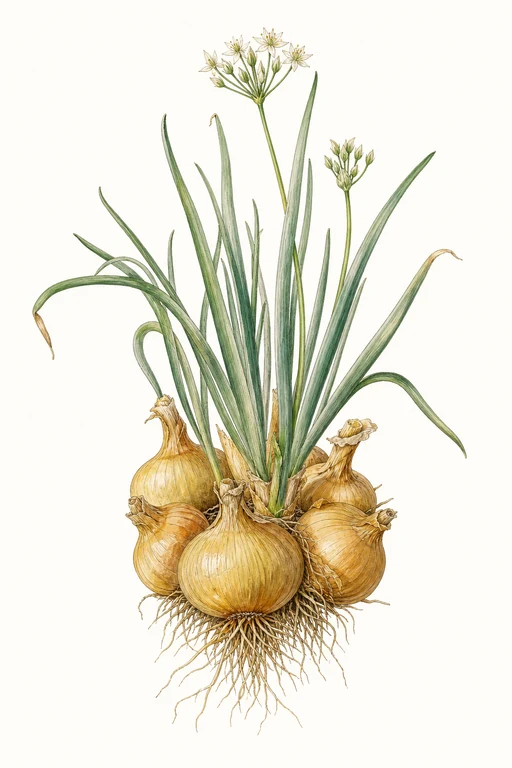
Yellow Sweet Spanish
Sunlit and sweet from the first bite—Yellow Sweet Spanish brings a gentle, honeyed flavor with a tender, juicy bite and a crisp, clean snap.
Its golden skins and well-filled bulbs store beautifully for long season enjoyment, making it a favorite for fresh use, roasting, and caramelizing into silky sweetness. Grow it for those moments when you want onions that taste as bright as they look—boldly flavorful yet never harsh.
Light: Full SunMaturity: 120 DaysHabit: Bulbing
Location not set yet
Location not set yet
Enter your ZIP for local crop dates
Yellow Sweet Spanish Planting Dates by USDA Zone
Estimated US hardiness-zone windows for sow, transplant, and harvest. Enter a US ZIP above for exact local dates, or open a zone below.
| Zone | Start Indoors | Sow / Transplant | Harvest |
|---|---|---|---|
| Zone 1a | Protected Environment Only | ||
| Zone 1b | Protected Environment Only | ||
| Zone 2a | Protected Environment Only | ||
| Zone 2b | Protected Environment Only | ||
| Zone 3a | Protected Environment Only | ||
| Zone 3b | Apr 7th | May 19th | Sep 16th – Sep 21st |
| Zone 4a | Apr 3rd | May 15th | Sep 12th – Sep 24th |
| Zone 4b | Apr 1st | May 13th | Sep 10th – Sep 27th |
| Zone 5a | Mar 27th | May 8th | Sep 5th – Sep 30th |
| Zone 5b | Mar 23rd | May 4th | Sep 1st – Oct 5th |
| Zone 6a | Mar 20th | May 1st | Aug 29th – Oct 10th |
| Zone 6b | Mar 14th | Apr 25th | Aug 23rd – Oct 16th |
| Zone 7a | Mar 9th | Apr 20th | Aug 18th – Oct 20th |
| Zone 7b | Feb 27th | Apr 10th | Aug 8th – Oct 28th |
| Zone 8a | Feb 18th | Apr 1st | Jul 30th – Nov 5th |
| Zone 8b | Feb 9th | Mar 23rd | Jul 21st – Nov 12th |
| Zone 9a | Jan 23rd | Mar 6th | Jul 4th – Nov 26th |
| Zone 9b | Dec 29th | Feb 9th | Jun 9th – Dec 9th |
| Zone 10a | Continuous Production | ||
| Zone 10b | Continuous Production | ||
| Zone 11a | Continuous Production | ||
| Zone 11b | Continuous Production | ||
| Zone 12a | Continuous Production | ||
| Zone 12b | Continuous Production | ||
| Zone 13a | Continuous Production | ||
| Zone 13b | Continuous Production | ||
Crop Details
| Trait | Value |
|---|---|
| Days to Maturity | 120 |
| Sun Requirements | Full Sun |
| Growth Habit | Bulbing |
| Support Needed | None |
| Planting Depth | Normal |
| Germination Temp (°F) | 70 |
| Min Soil Temp (°F) | 50 |
| Min Night Temp (°F) | 35 |
| Harden Off (days) | 7 |
Culinary Notes

Chef's Note
Yellow Sweet Spanish leans sweet and tender, so it caramelizes fast without turning sharp or sulfur-bitey. Use it raw for that crisp snap, or heat it hard until it goes glossy—this is the kind of onion that tastes like browned sugar instead of steam.

Best Uses
- caramelizing into a smooth, jammy topping for burgers and sausages
- roasting until bronzed and syrupy for grain bowls or as a side
- thin raw slicing in salads or sandwiches where you want snap, not bite-back
- quick sauté to glossy translucence for pasta, fajitas, and pan sauces

Flavor Profile

Kitchen Pairings
Frequently Asked Questions
What pest or disease commonly affects Allium cepa (yellow sweet Spanish onions), and how do I control it?
How often should I water Allium cepa during the main growing phase, and what soil moisture target should I aim for?
How can I tell when Allium cepa (yellow sweet Spanish onions) are ready to harvest?
Sowing Tips

Transplant Conditions
Wait until soil reaches 50°F and nights stay above 35°F before moving outdoors. Harden off for 7 days first.
Expert Note

For long-day Spanish onions, grow strong seedlings (sturdy tops, not tall/spindly) and transplant into cold soil as soon as workable to keep plants from bolting.