
Yellow Wonder
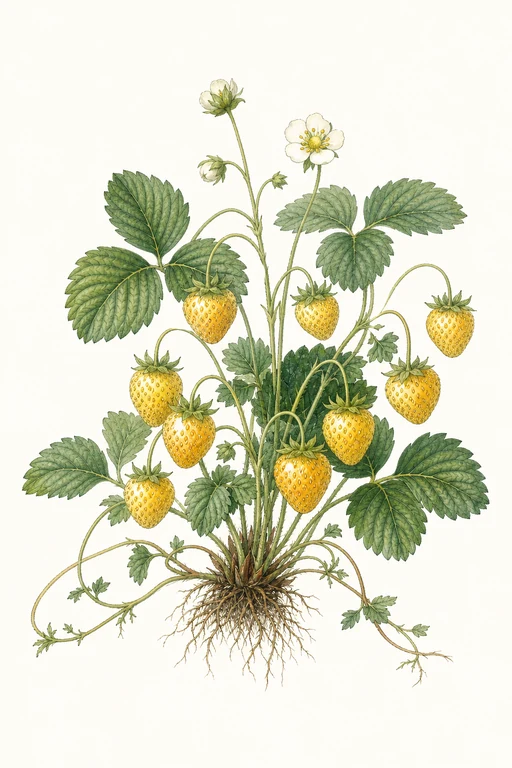
Sunlit and sweet, Yellow Wonder alpine strawberries glow in the garden with honey-amber berries that perfume the air as they ripen.
Their flavor is bright and delicately tangy, with a tender, juicy bite that feels almost velvety—small-fruited, yet richly satisfying. Grow Yellow Wonder for fresh garden baskets, charming desserts, and spoonable preserves that capture their golden, aromatic character at peak summer.
Light: Full SunMaturity: 60 DaysHabit: Spreading
Planting schedules and alerts are optimized for Columbus (Zone 6b).
Crop Dates
| Milestone | Date |
|---|---|
| Start Indoors | Mar 28th |
| Last Frost | Apr 25th |
| Transplant / Sow Outdoors | Apr 25th |
| Harvest Begins | Jun 24th |
| Harvest Ends | Oct 16th |
Crop Details
| Trait | Value |
|---|---|
| Days to Maturity | 60 |
| Sun Requirements | Full Sun |
| Growth Habit | Spreading |
| Support Needed | None |
| Planting Depth | Normal |
| Germination Temp (°F) | 60 |
| Min Soil Temp (°F) | 40 |
| Min Night Temp (°F) | 40 |
| Harden Off (days) | 7 |
Culinary Notes

Chef's Note
Yellow Wonder alpine strawberries are small but intensely perfumed—think honeyed sweetness with a clean, delicate tang and a juicy, almost velvety texture. They’re best treated gently: macerate briefly, keep cooks short, and let their aroma lead before sugar and dairy smooth everything out.

Best Uses
- eating straight in a tight handful—no dressings needed
- quick-maccerated spoon fruit with a little sugar and lemon
- hot-simmer preserves that keep a glossy, jewel-like set
- folding into softly whipped cream or yogurt for a perfumed finish

Flavor Profile

Kitchen Pairings
Frequently Asked Questions
What pest or disease is most likely on Fragaria vesca (wild/forest strawberry), and how do I control it?
How often should I water Fragaria vesca during its main growing phase, and what soil moisture should I maintain?
How can I tell when Fragaria vesca is ready to harvest?
Sowing Tips

Transplant Conditions
Wait until soil reaches 40°F and nights stay above 40°F before moving outdoors. Harden off for 7 days first.
Expert Note

Keep plants evenly moist the first season and thin to promote airflow, since alpines fruit best with consistent spring growth.