
Yes To Yellow
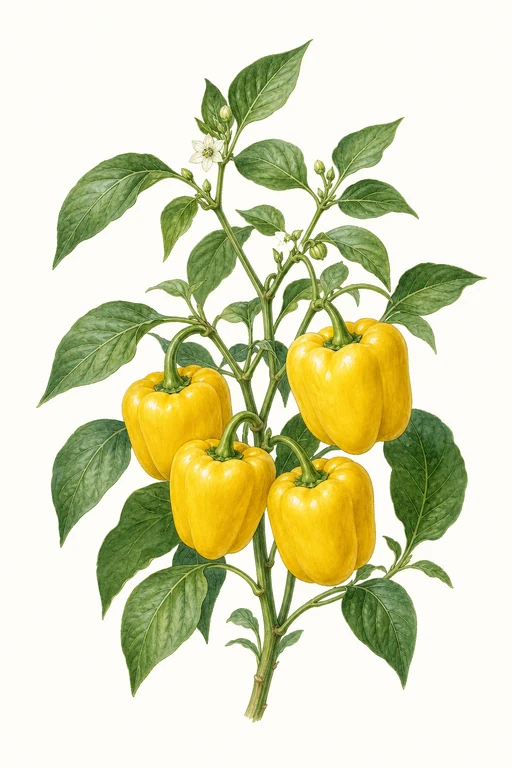
Sunlit and sweet, Yes To Yellow brings a vivid, warm-golden bell to the garden—crisp-fleshed and refreshingly juicy with a gentle, candy-like pepper flavor.
At maturity (about 75 days), the fruits develop a thick, smooth wall and a satisfying crunch that shines in fresh salads, vibrant salsas, and roasted sheet-pan color. Grow it for its bold yellow presence and dependable, sweet performance—an easy favorite for gardeners who want flavor without heat.
Light: Full SunMaturity: 75 DaysHabit: Upright
Crop Dates : 8a
| Milestone | Date |
|---|---|
| Start Indoors | Feb 11th |
| Last Frost | Apr 1st |
| Transplant / Sow Outdoors | May 27th |
| Harvest Begins | Aug 10th |
| Harvest Ends | Nov 5th |
Crop Details
| Trait | Value |
|---|---|
| Days to Maturity | 75 |
| Sun Requirements | Full Sun |
| Growth Habit | Upright |
| Support Needed | Stake |
| Planting Depth | Normal |
| Germination Temp (°F) | 80 |
| Min Soil Temp (°F) | 60 |
| Min Night Temp (°F) | 50 |
| Harden Off (days) | 10 |
Culinary Notes

Chef's Note
Yes To Yellow has a thick, crisp wall that keeps its bite even after chopping and tossing—ideal when you want sweetness, not heat. Roast it hard for caramelized edges while it stays sliceable, or go raw to let the juicy crunch and candy-like flavor lead.

Best Uses
- chopped raw in salads where the crunch stays snappy
- quick salsa with lime and cilantro—juices lightly bind without going mushy
- high-heat roasting or sheet-pan caramelization for browned edges and soft-but-holding flesh
- thin strips for fajita-style skillet sizzle without overpowering the filling

Flavor Profile

Frequently Asked Questions
What pest or disease most commonly affects Capsicum annuum (common pepper), and how do I fix it?
How often should I water Capsicum annuum during the main growing phase?
How can I tell when Capsicum annuum is ready to harvest?
Sowing Tips

Transplant Conditions
Wait until soil reaches 60°F and nights stay above 50°F before moving outdoors. Harden off for 10 days first.
Expert Note

For sweet bell peppers, wait until soil is consistently warm (around 60°F+) and use a floating row cover for the first week if nights are chilly.