
Zinnia
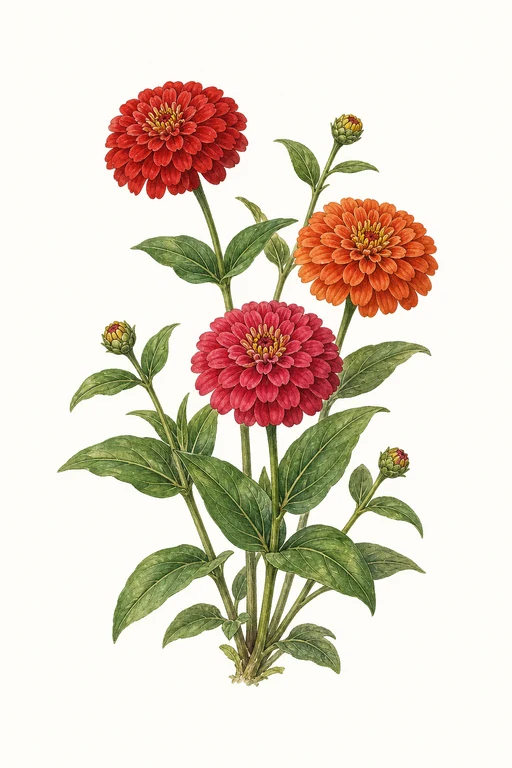
Sunlight seems to pour straight through Zinnia’s petals—bold, saturated blooms with a velvety, layered look that holds its color with remarkable confidence.
Expect sturdy stems and a generous flush of flowers in about 60 days, making it a standout for fresh bouquets and long-lasting arrangements. Drought-tolerant and sun-loving, Zinnia thrives where other annuals hesitate, rewarding gardeners with a vivid, garden-to-vase showpiece all season long.
Light: Full SunMaturity: 60 DaysHabit: Upright
Crop Dates : 2b
| Milestone | Date |
|---|---|
| Start Indoors | Direct Sow |
| Last Frost | May 15th |
| Transplant / Sow Outdoors | May 15th |
| Harvest Begins | Jul 14th |
| Harvest Ends | Aug 25th |
Crop Details
| Trait | Value |
|---|---|
| Days to Maturity | 60 |
| Sun Requirements | Full Sun |
| Growth Habit | Upright |
| Support Needed | None |
| Planting Depth | Surface |
| Germination Temp (°F) | 75 |
| Min Soil Temp (°F) | 70 |
| Min Night Temp (°F) | 50 |
| Harden Off (days) | Not Required |
Culinary Notes

Chef's Note
Edible zinnia petals bring a lightly peppery, floral snap that reads best when they stay mostly crisp—think chilled garnish or a quick vinegar touch, not long cooking. Use sparingly for impact; the color and texture are the whole point on the plate.

Best Uses
- as a colorful garnish on chilled plates
- tossing a small handful into mixed green salads for a snappy floral note
- folding into quick pickles or a vinegar-forward slaw for a brief, pretty hit of color
- infusing into a simple syrup or ice-cold spritz for a gentle floral aroma

Flavor Profile

Kitchen Pairings
Frequently Asked Questions
Why are my Zinnia elegans leaves turning yellow and spots showing up, and what should I do?
How often should I water Zinnia elegans during the main growing phase?
When is Zinnia elegans ready to harvest for cut flowers?
Sowing Tips

Transplant Conditions
Wait until soil reaches 70°F and nights stay above 50°F before moving outdoors.
Expert Note

Direct-sow in warm soil after frost (or start only very shallowly indoors if you must), then thin for strong stems and maximum bloom duration.