
Zobo Roselle
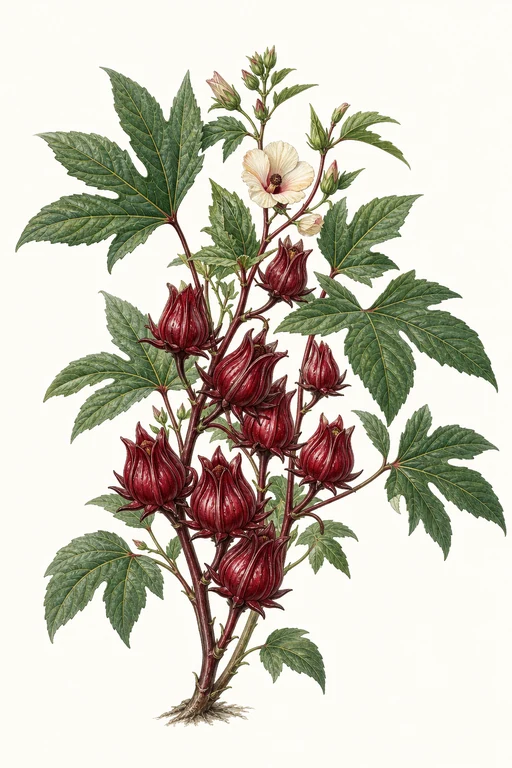
Tart, ruby-scarlet calyces unfurl with a jewel-bright tang—Zobo Roselle delivers the bold, floral bite prized for herbal beverage color and character.
At maturity, the succulent, berry-like calyxes turn a deep garnet-red and hold a pleasantly firm, juicy texture that feels vivid between the fingers. Grow this tropical shrub for its richly colored, aromatic ingredient—ideal for crafting signature zobo-style drinks and for infusing syrups and preserves with an unmistakable roselle tang.
Light: Full SunMaturity: 90 DaysHabit: Clumping
Planting schedules and alerts are optimized for Columbus (Zone 6b).
Crop Dates
| Milestone | Date |
|---|---|
| Start Indoors | Direct Sow |
| Last Frost | Apr 25th |
| Transplant / Sow Outdoors | Jun 6th |
| Harvest Begins | Sep 4th |
| Harvest Ends | Oct 16th |
Crop Details
| Trait | Value |
|---|---|
| Days to Maturity | 90 |
| Sun Requirements | Full Sun |
| Growth Habit | Clumping |
| Support Needed | None |
| Planting Depth | Normal |
| Germination Temp (°F) | 75 |
| Min Soil Temp (°F) | 65 |
| Min Night Temp (°F) | 55 |
| Harden Off (days) | 10 |
Culinary Notes

Chef's Note
These hibiscus calyces bring a clean, mouth-puckering acidity plus a distinctly floral, ruby aroma—steep them hot and don’t overdo the time or they can tip vegetal. Reduce the liquor into a syrup and it turns silky and spoon-coating, making the tang read as bright rather than harsh.

Best Uses
- zobo-style drink base (steep calyces for color + tang)
- syrup for cocktails or ginger ale—reduce until it coats the spoon
- quick pickles for ruby-tang pops in salads and grain bowls
- jam/jelly where the calyx pectin sets a rosy, tart spread

Flavor Profile

Kitchen Pairings
Frequently Asked Questions
What pest or disease most commonly affects Hibiscus sabdariffa (zobo/roselle), and how can I control it?
How often should I water Hibiscus sabdariffa during its main growing phase?
How do I know when Hibiscus sabdariffa is ready to harvest?
Sowing Tips

Transplant Conditions
Wait until soil reaches 65°F and nights stay above 55°F before moving outdoors. Harden off for 10 days first.

Direct Sow Preferred
Sensitive roots — does not transplant well. If starting indoors, use biodegradable pots and disturb roots as little as possible when moving outdoors.
Expert Note

Grow roselle like a warm-season hibiscus: start plants when nights are consistently warm and keep soil evenly moist for best calyx development.