SproutSmart
SproutSmart Intelligent Garden Sowing

Chiltepin

Pepper

Planting Schedule

Add Chiltepin to your garden to build a schedule and get reminders.
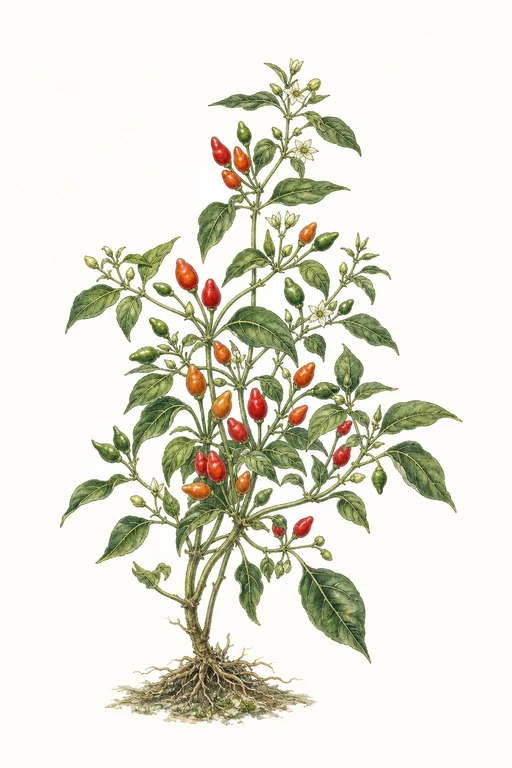
Botanical illustration of Chiltepin
90d to harvest

Aromas first—Chiltepin’s tiny peppers bloom with a bright, wild heat and a fragrant, peppery snap that feels vivid even before the first taste. At maturity, the fruits hang in clusters, turning from green to a fiery mix of warm amber and red, with a crisp, thin-walled texture that delivers intense flavor in a small package. Grow Chiltepin for bold fresh snacking, lively sauces, and quick pickling, where its spirited heat and aromatic character shine.

Crop Dates

Growing note: Frost-free Zone 11a supports continuous outdoor production.
MilestoneDate
ClimateFrost-Free Climate
Growing ApproachContinuous Production

Crop Details

TraitValue
Days to Maturity90
Sun RequirementsFull SunFull sun
Growth HabitUpright
Support NeededStake
Planting DepthNormal
Germination Temp (°F)80
Min Soil Temp (°F)60
Min Night Temp (°F)50
Harden Off (days)10

Frequently Asked Questions


Chiltepin (Capsicum annuum) pests: what should I watch for and how do I stop aphids or thrips?
In home gardens, chiltepin commonly gets aphids and thrips that suck sap and can cause distorted new growth. Check tender tips and the undersides of leaves weekly; if you see clusters, spray thoroughly with insecticidal soap and repeat every 5–7 days for 2–3 rounds. Keep weeds down around the plants and avoid over-fertilizing with nitrogen, which encourages soft growth that pests prefer.
How often should I water chiltepin during the main growing phase (when flowering and fruiting are starting)?
During flowering and fruiting (roughly after established growth), keep soil evenly moist but not waterlogged—aim for a consistent damp feel 1–2 inches down. Water about 1–2 times per week depending on heat, increasing frequency during hot spells; the target is preventing leaf wilting without letting the root zone stay soggy. Use drip irrigation if possible and water at the soil level to reduce leaf wetness.
Botanical illustration of Chiltepin

Aromas first—Chiltepin’s tiny peppers bloom with a bright, wild heat and a fragrant, peppery snap that feels vivid even before the first taste. At maturity, the fruits hang in clusters, turning from green to a fiery mix of warm amber and red, with a crisp, thin-walled texture that delivers intense flavor in a small package. Grow Chiltepin for bold fresh snacking, lively sauces, and quick pickling, where its spirited heat and aromatic character shine.