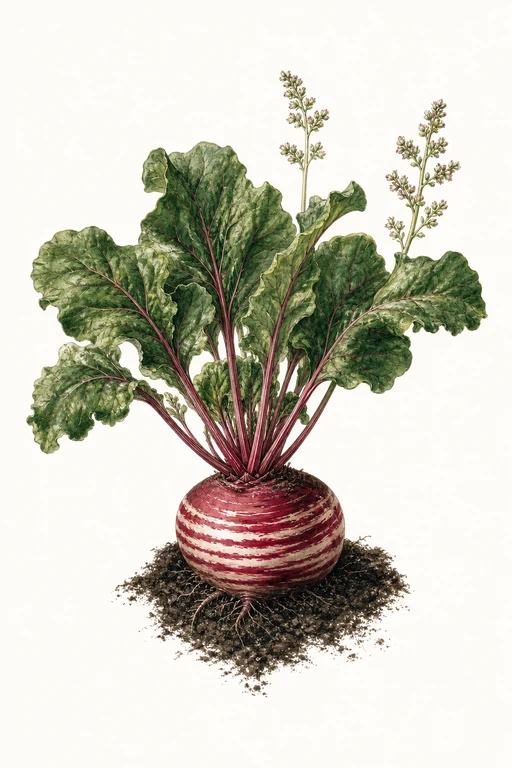
Chioggia Guardsman
55d to harvest
Sweet, tender roots open to a mesmerizing candy-cane cross-section—crisp concentric rings of creamy white and candy-striped red that look almost too beautiful to plant. Chioggia Guardsman beets develop a deep, earthy sweetness with a fine, satiny texture that stays pleasantly tender at harvest, making them a standout for showy presentations. Grow for fresh slicing, vibrant roasting, and striking pickled color that holds its charm from garden to jar.
Crop Dates
Growing note: In frost-free Zone 11a, grow this cool-season crop during the cooler dry season (October–February).
| Milestone | Date |
|---|---|
| Start Indoors | — |
| Climate | Frost-Free Climate |
| Transplant / Sow Outdoors | Oct 1st |
| Harvest Begins | Nov 25th |
| Harvest Ends | Feb 28th |
Crop Details
| Trait | Value |
|---|---|
| Days to Maturity | 55 |
| Sun Requirements | Full Sun |
| Growth Habit | Taproot |
| Support Needed | None |
| Planting Depth | Normal |
| Germination Temp (°F) | 50 |
| Min Soil Temp (°F) | 45 |
| Min Night Temp (°F) | 28 |
| Harden Off (days) | Not Required |
Recommended Companions
Frequently Asked Questions
What is a common beet (Beta vulgaris subsp. vulgaris) pest or disease problem, and how can I address it?
Leaf spot and Cercospora infections are common on beet greens, appearing as small brown to purple spots that spread on older leaves. Remove badly affected leaves, avoid overhead watering, and improve airflow between plants; if it’s severe, treat with a copper-based fungicide labeled for vegetables and follow the label timing. Watch for aphids on tender growth—spray plants with a strong water jet or use insecticidal soap for control.
How often should I water Chioggia Guardsman beets during peak growth?
During the main root-filling phase (roughly mid-season to harvest), keep soil consistently evenly moist—about 1 inch (2.5 cm) of water per week total, adjusted for rainfall and heat. Let the top 1 inch of soil dry slightly between waterings, but don’t let the root zone fully dry out, which can cause tough, woody roots. Mulch helps maintain steady moisture while beets are swelling.