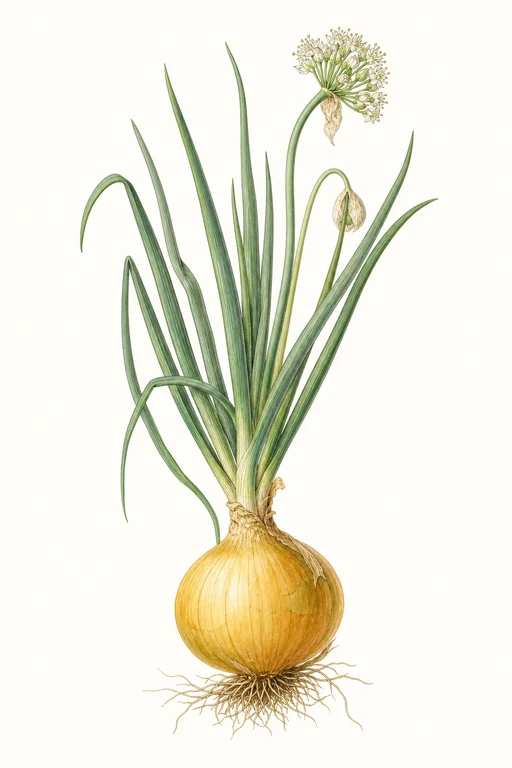
Copra
100d to harvest
Copra yellow onions open with a bright, honeyed aroma and a crisp, juicy bite that turns sweet and mellow when warmed. The bulbs form a handsome, uniform globe with warm golden skins and tight, fine-textured layers—ideal for everyday use in fresh salads, savory roasts, and slow-simmered sauces, as well as classic pickling for tangy crunch.
Crop Dates
Growing note: In frost-free Zone 11a, grow this cool-season crop during the cooler dry season (October–February).
| Milestone | Date |
|---|---|
| Start Indoors | — |
| Climate | Frost-Free Climate |
| Transplant / Sow Outdoors | Oct 1st |
| Harvest Begins | Jan 9th |
| Harvest Ends | Feb 28th |
Crop Details
| Trait | Value |
|---|---|
| Days to Maturity | 100 |
| Sun Requirements | Full Sun |
| Growth Habit | Bulbing |
| Support Needed | None |
| Planting Depth | Normal |
| Germination Temp (°F) | 70 |
| Min Soil Temp (°F) | 45 |
| Min Night Temp (°F) | 28 |
| Harden Off (days) | 7 |
Recommended Companions
Frequently Asked Questions
What pest or disease is most common on Allium cepa (onions), and how do I treat it at home?
Onions (Allium cepa) are commonly hit by onion maggots and, in humid conditions, downy mildew. To reduce onion maggots, cover seedbeds/transplants with fine insect netting and remove any infested plants immediately; use a soil drench with labeled products if available in your area. For downy mildew, improve airflow and avoid wetting the foliage, then apply a copper-based fungicide early at the first purple/gray downy patches, following the label exactly.
How often should I water Allium cepa during the main growing phase?
During active bulbing (after plants are established and tops are growing), keep the soil evenly moist but not soggy—aim for about 1 inch (2.5 cm) of water per week, adjusted for rainfall and heat. Water deeply so moisture reaches the root zone, and let the top 1–2 inches (2.5–5 cm) of soil dry slightly between waterings to prevent rot and disease.