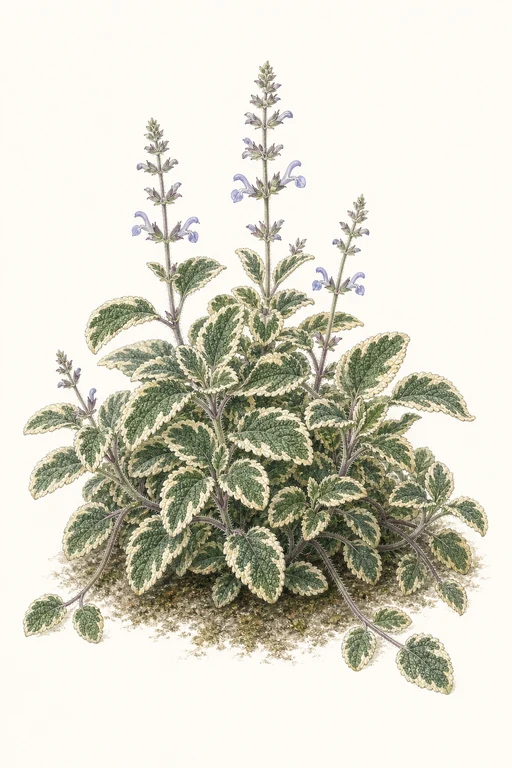
Dwarf Sage
60d to harvest
Aromatic and ornamental, Dwarf Sage dazzles with compact, variegated foliage that releases a cool, piney-sweet fragrance at the slightest touch. The leaves are richly textured—soft yet sturdy—with creamy margins that hold their brightness as plants mature in about 60 days. Ideal for fresh garnishing, fragrant sachets, and standout flavoring in herb blends, Dwarf Sage brings both beauty and bold sage character to the garden bed or container.
Crop Dates
Growing note: In frost-free Zone 11a, grow this cool-season crop during the cooler dry season (October–February).
| Milestone | Date |
|---|---|
| Start Indoors | — |
| Climate | Frost-Free Climate |
| Transplant / Sow Outdoors | Oct 1st |
| Harvest Begins | Nov 30th |
| Harvest Ends | Feb 28th |
Crop Details
| Trait | Value |
|---|---|
| Days to Maturity | 60 |
| Sun Requirements | Full Sun |
| Growth Habit | Upright |
| Support Needed | None |
| Planting Depth | Normal |
| Germination Temp (°F) | 70 |
| Min Soil Temp (°F) | 60 |
| Min Night Temp (°F) | 50 |
| Harden Off (days) | 7 |
Recommended Companions
Frequently Asked Questions
What pest or disease is most likely on Salvia officinalis (dwarf sage), and how do I treat it?
Sage commonly develops powdery mildew (white, dusty growth on leaves) when air is humid and plants stay wet. Space plants to improve airflow, water at the soil line, and remove heavily affected leaves early. If mildew keeps returning, spray with a potassium bicarbonate or sulfur-based product labeled for herbs, following label directions closely.
How often should I water Salvia officinalis during its main growing phase?
During the active growth phase, water deeply only when the top 1 inch of soil feels dry, since Salvia officinalis prefers dry-to-moderately moist conditions. Aim for infrequent but thorough soaking so roots reach deeper; avoid daily light watering that keeps foliage and soil constantly damp. In full sun, adjust frequency so the soil drains well and never stays soggy.