SproutSmart
SproutSmart Intelligent Garden Sowing

Dyer's Chamomile

Chamomile

Planting Schedule

Add Dyer's Chamomile to your garden to build a schedule and get reminders.
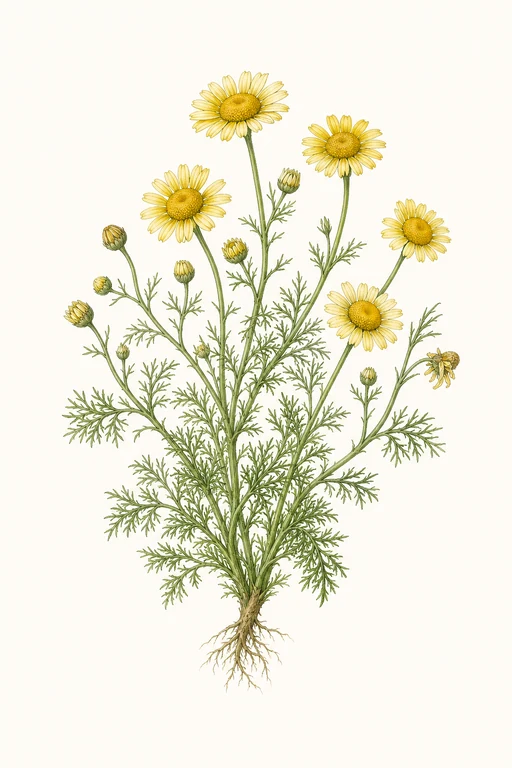
Botanical illustration of Dyer's Chamomile
90d to harvest

Fragrant, apple-sweet chamomile blooms open into daisy-like clusters with a honeyed, golden perfume that fills the garden on warm afternoons. Dyer's Chamomile forms sturdy, feathery foliage and produces abundant heads with a crisp, delicate texture—ideal for drying and for infusing the gentle, floral character that makes this herb a favorite. Grow it for its aromatic presence and its steady harvest of charming blossoms over a long, satisfying season.

Crop Dates

Growing note: In frost-free Zone 11a, grow this cool-season crop during the cooler dry season (October–February).
MilestoneDate
Start Indoors
ClimateFrost-Free Climate
Transplant / Sow OutdoorsOct 1st
Harvest BeginsDec 30th
Harvest EndsFeb 28th

Crop Details

TraitValue
Days to Maturity90
Sun RequirementsFull SunFull sun
Growth HabitUpright
Support NeededNone
Planting DepthSurface
Germination Temp (°F)65
Min Soil Temp (°F)45
Min Night Temp (°F)35
Harden Off (days)7

Frequently Asked Questions


What pest or disease commonly affects Anthemis tinctoria (dyer’s chamomile), and what should I do?
A common problem is powdery mildew, which shows up as a white, dusty coating on leaves during warm, humid spells. Improve airflow by spacing plants adequately and watering at the soil line, then remove heavily infected foliage early. If mildew keeps coming back, use a labeled sulfur-based fungicide and reapply according to the label at the first signs on new growth.
How often should I water Anthemis tinctoria during its main growing phase?
During active growth (from establishment through early flowering), keep the top 1–2 inches of soil lightly moist but never soggy—typically watering about 1 inch per week total, adjusted for rainfall and heat. Let the soil dry slightly between waterings, since Anthemis tinctoria performs best in moderately dry conditions rather than consistently wet soil. Once plants are established, reduce watering because overly wet soil increases disease risk.
Botanical illustration of Dyer's Chamomile

Fragrant, apple-sweet chamomile blooms open into daisy-like clusters with a honeyed, golden perfume that fills the garden on warm afternoons. Dyer's Chamomile forms sturdy, feathery foliage and produces abundant heads with a crisp, delicate texture—ideal for drying and for infusing the gentle, floral character that makes this herb a favorite. Grow it for its aromatic presence and its steady harvest of charming blossoms over a long, satisfying season.