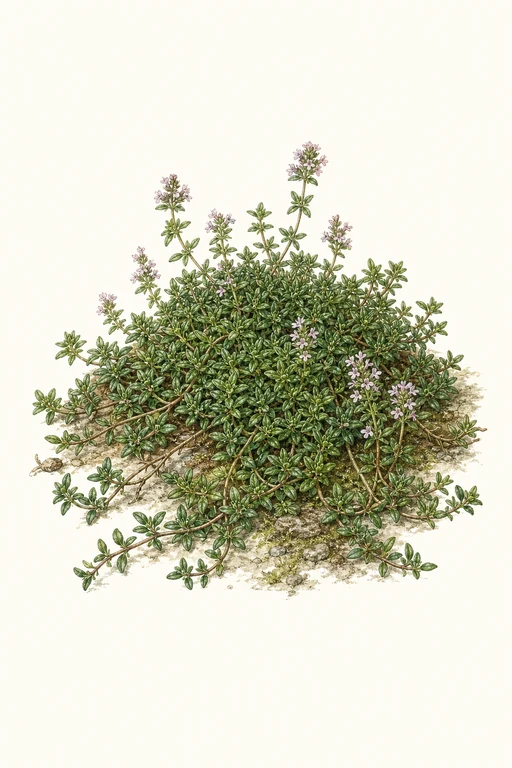
Elfin Thyme
120d to harvest
Aromatic as a sunlit hillside, Elfin Thyme forms a low, velvety mat that releases a bright, herbal perfume with every brush of the fingers. Its tiny, needlelike leaves are richly green and densely textured, offering a concentrated flavor that shines in long-simmering dishes and quick-roasted favorites alike. Grow it for edging, pathways, and container spillovers—an ornamental herb that tastes as alive as it looks.
Crop Dates
Growing note: In frost-free Zone 11a, grow this cool-season crop during the cooler dry season (October–February).
| Milestone | Date |
|---|---|
| Start Indoors | — |
| Climate | Frost-Free Climate |
| Transplant / Sow Outdoors | Oct 1st |
| Harvest Begins | Jan 29th |
| Harvest Ends | Feb 28th |
Crop Details
| Trait | Value |
|---|---|
| Days to Maturity | 120 |
| Sun Requirements | Full Sun |
| Growth Habit | Spreading |
| Support Needed | None |
| Planting Depth | Surface |
| Germination Temp (°F) | 65 |
| Min Soil Temp (°F) | 50 |
| Min Night Temp (°F) | 40 |
| Harden Off (days) | 7 |
Recommended Companions
Frequently Asked Questions
What pest or disease is most likely on Thymus serpyllum (elfin thyme), and how can I prevent it?
The most common issue is root/crown rot from overly wet, poorly drained soil, often showing up as sudden wilting or blackened stems at the base. Plant elfin thyme in fast-draining, gritty soil and water only when the surface has dried; avoid wetting the foliage. If you find affected plants, remove them promptly and replant in a drier spot rather than trying to “save” the crown.
How often should I water elfin thyme during its main growing phase?
During active growth (typically once established until midsummer), water deeply only when the top 1 inch of soil feels dry, then let it dry again before the next watering. In containers, check moisture more frequently, but keep it on the dry side—elfin thyme tolerates drought far better than constant moisture. Never keep the root zone evenly moist.
How do I know when elfin thyme is ready to harvest?
You can start harvesting around 90–120 days, when the plants have formed a dense mat and stems are pencil-like with lots of small leaves. Harvest in the morning and snip stems just above leaf nodes, taking only about one-third of the growth at a time so the mat can keep filling in. For best flavor, harvest before flowering or right at the first bud stage.