
Mother Of Thyme
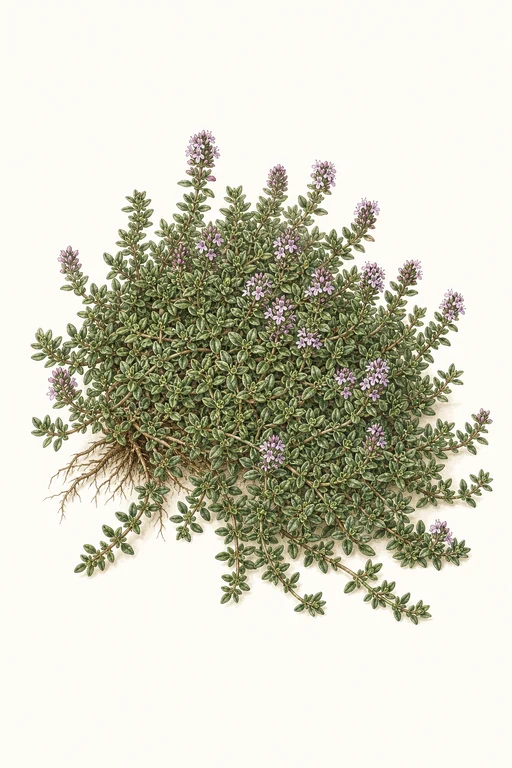
Breathe in the vivid, herbal perfume of ‘Mother Of Thyme’—a low, creeping mat that releases a warm, savory fragrance with every touch. Its tiny leaves are densely set and richly textured, forming a tidy, trailing cushion that’s as beautiful as it is aromatic, with flavor that shines in dried bundles and fresh sprigs alike. Ideal for edging and ground-cover planting, it’s a perennial you’ll return to season after season for its steady, fragrant presence and dependable harvest over time.
Sowing Tips

Soil Temperature
Direct sow or transplant when soil at planting depth holds 50°F for reliable germination and early growth.
Expert Note

For best establishment, start indoors for quicker coverage but prioritize full sun and very well-drained soil to prevent damping off.
Crop Dates
| Milestone | Date |
|---|---|
| Start Indoors | — |
| Climate | Frost-Free Climate |
| Transplant / Sow Outdoors | Oct 1st |
| Harvest Begins | Dec 10th |
| Harvest Ends | Feb 28th |
Crop Details
| Trait | Value |
|---|---|
| Days to Maturity | 70 |
| Sun Requirements | Full Sun |
| Growth Habit | Spreading |
| Support Needed | None |
| Planting Depth | Surface |
| Germination Temp (°F) | 65 |
| Min Soil Temp (°F) | 50 |
| Min Night Temp (°F) | 40 |
| Harden Off (days) | 7 |
Recommended Companions


Frequently Asked Questions
What pest or disease most commonly affects Thymus serpyllum (mother of thyme) and how can I treat it?
How often should I water Thymus serpyllum during the main growing phase?
How do I know when Thymus serpyllum is ready to harvest (around 70 days)?
Sowing Tips
Soil Temperature
Direct sow or transplant when soil at planting depth holds 50°F for reliable germination and early growth.
Expert Note
For best establishment, start indoors for quicker coverage but prioritize full sun and very well-drained soil to prevent damping off.
Breathe in the vivid, herbal perfume of ‘Mother Of Thyme’—a low, creeping mat that releases a warm, savory fragrance with every touch. Its tiny leaves are densely set and richly textured, forming a tidy, trailing cushion that’s as beautiful as it is aromatic, with flavor that shines in dried bundles and fresh sprigs alike. Ideal for edging and ground-cover planting, it’s a perennial you’ll return to season after season for its steady, fragrant presence and dependable harvest over time.