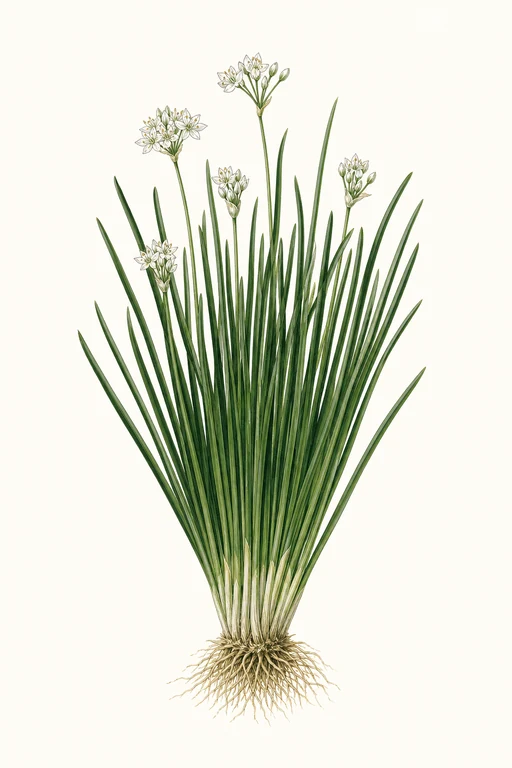
New Belt
60d to harvest
Tender, grassy blades of New Belt chives unfurl with a fresh, allium-bright aroma and a pleasantly mild bite—never harsh, always inviting. At maturity (about 60 days), the clumps form fine, upright tufts with a crisp, springy texture that stays attractive through repeated harvests. Ideal for sprinkling over fresh salads, finishing sauces, and elevating omelets and savory dishes with a clean, green allium note.
Crop Dates
Growing note: In frost-free Zone 11a, grow this cool-season crop during the cooler dry season (October–February).
| Milestone | Date |
|---|---|
| Start Indoors | — |
| Climate | Frost-Free Climate |
| Transplant / Sow Outdoors | Oct 1st |
| Harvest Begins | Nov 30th |
| Harvest Ends | Feb 28th |
Crop Details
| Trait | Value |
|---|---|
| Days to Maturity | 60 |
| Sun Requirements | Full Sun |
| Growth Habit | Clumping |
| Support Needed | None |
| Planting Depth | Normal |
| Germination Temp (°F) | 60 |
| Min Soil Temp (°F) | 45 |
| Min Night Temp (°F) | 35 |
| Harden Off (days) | 7 |
Recommended Companions
Frequently Asked Questions
What’s a common pest or disease problem for garlic chives (Allium tuberosum) and how do I treat it?
Garlic chives are often hit by onion thrips, which cause silvery streaks and stunted, deformed leaves. Spray plants with insecticidal soap in the evening and repeat every 5–7 days for 2–3 rounds; also remove and discard badly damaged leaves to reduce reinfestation. If you see soft, collapsing bases or foul odor (typical of allium rot), stop watering the crown, improve drainage, and discard affected clumps rather than trying to “save” them in place.
How often should I water garlic chives during active growth, and what soil moisture should I aim for?
During the main growth phase, keep the soil consistently moist but not waterlogged—about 1 inch (2.5 cm) of water per week total, adjusted for heat and rainfall. Water when the top 1 inch of soil feels dry, since garlic chives will tolerate brief dryness better than soggy conditions that encourage crown rot.