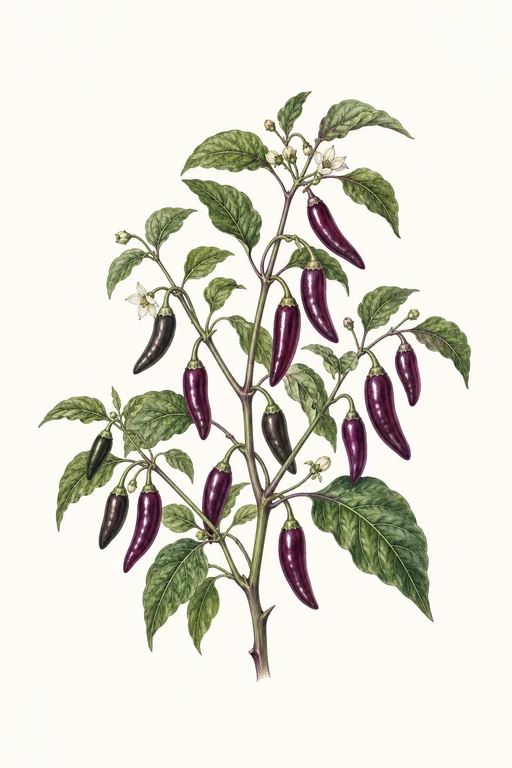
Serrano Purple
75d to harvest
Aromatic and vivid, Serrano Purple brings a rare, smoky-sweet heat with peppers that ripen to a deep, wine-purple glow. The fruits are slender and upright, with a crisp, snappy skin and a bright, peppery bite that lingers pleasantly. Grow Serrano Purple for bold fresh salsas, quick pickling, and roasting on the grill—its striking color and lively heat make every batch look as good as it tastes.
Crop Dates
Growing note: Frost-free Zone 11a supports continuous outdoor production.
| Milestone | Date |
|---|---|
| Climate | Frost-Free Climate |
| Growing Approach | Continuous Production |
Crop Details
| Trait | Value |
|---|---|
| Days to Maturity | 75 |
| Sun Requirements | Full Sun |
| Growth Habit | Bush |
| Support Needed | Stake |
| Planting Depth | Normal |
| Germination Temp (°F) | 80 |
| Min Soil Temp (°F) | 60 |
| Min Night Temp (°F) | 50 |
| Harden Off (days) | 10 |
Recommended Companions
Frequently Asked Questions
What pest or disease commonly affects Capsicum annuum (Serrano-type peppers), and how can I control it?
Pepper plants (Capsicum annuum) commonly get aphids and can also develop fungal leaf spots in humid conditions. Spray affected plants with insecticidal soap when you first see clusters of aphids, and remove heavily spotted leaves to improve airflow. If leaf spot is spreading, use a labeled fungicide and avoid wetting the foliage when watering.
How often should I water Serrano peppers during the main growing phase, and what soil moisture level should I aim for?
During active growth and fruiting, keep the soil consistently moist but not soggy—aim for the top 1 inch to dry slightly between waterings. Water deeply about 1–2 times per week depending on heat, and increase frequency during hot spells so plants don’t wilt and drop flowers. Mulching helps maintain even moisture around the roots, which reduces stress and blossom drop.