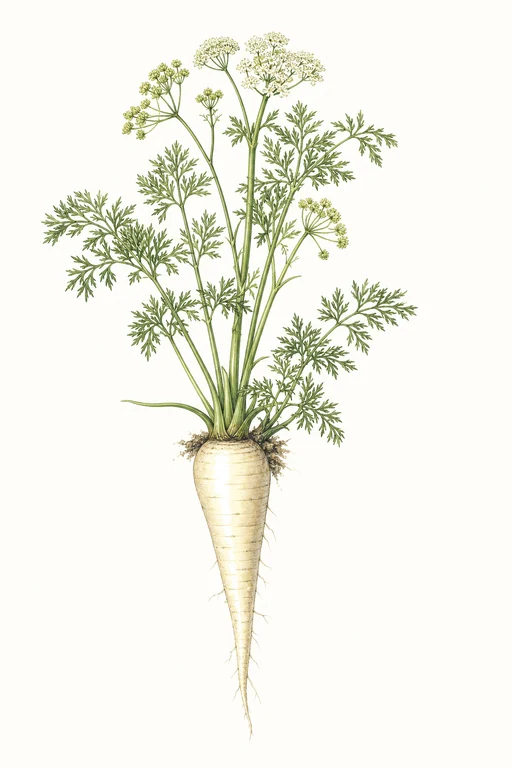
White Satin
75d to harvest
Silky and luminous, White Satin carrots mature into long, tapered roots with a creamy white finish and a faint, satiny sheen that catches the light in the garden. Their flesh stays crisp and tender, offering a clean, sweet bite that shines whether you lift them young for fresh snacking or let them fully develop for roasting and hearty winter-style preparations. White Satin’s Danvers form—classic length with a graceful shoulder—makes it a standout for gardeners who want a refined, elegant harvest from a reliable 75-day rhythm.
Crop Dates
Growing note: In frost-free Zone 11a, grow this cool-season crop during the cooler dry season (October–February).
| Milestone | Date |
|---|---|
| Start Indoors | — |
| Climate | Frost-Free Climate |
| Transplant / Sow Outdoors | Oct 1st |
| Harvest Begins | Dec 15th |
| Harvest Ends | Feb 28th |
Crop Details
| Trait | Value |
|---|---|
| Days to Maturity | 75 |
| Sun Requirements | Full Sun |
| Growth Habit | Taproot |
| Support Needed | None |
| Planting Depth | Normal |
| Germination Temp (°F) | 60 |
| Min Soil Temp (°F) | 45 |
| Min Night Temp (°F) | 28 |
| Harden Off (days) | Not Required |
Recommended Companions
Frequently Asked Questions
What pest or disease commonly affects carrots (Daucus carota) like ‘White Satin,’ and what should I do?
Carrot flies and their larvae can bore into the roots, often starting with wilting or a damaged root crown near the soil line. Use row cover immediately after sowing and keep it on until harvest, then remove any infested plants to break the life cycle; if you see eggs/early damage, re-cover the bed promptly. Fungal problems like leaf blight are more likely in persistent damp conditions—space rows to keep foliage dry and avoid overhead watering.
How do I tell when ‘White Satin’ carrots are ready to harvest?
Start checking at about 70–75 days: look for the shoulder of the carrot showing at the soil surface and feel for a firm, well-formed root beneath. White Satin is a small-to-medium carrot—harvest once the roots reach a thumb-to-finger thickness so they stay sweet and tender. If you wait too long, the roots can become tougher and more likely to develop a woody center.