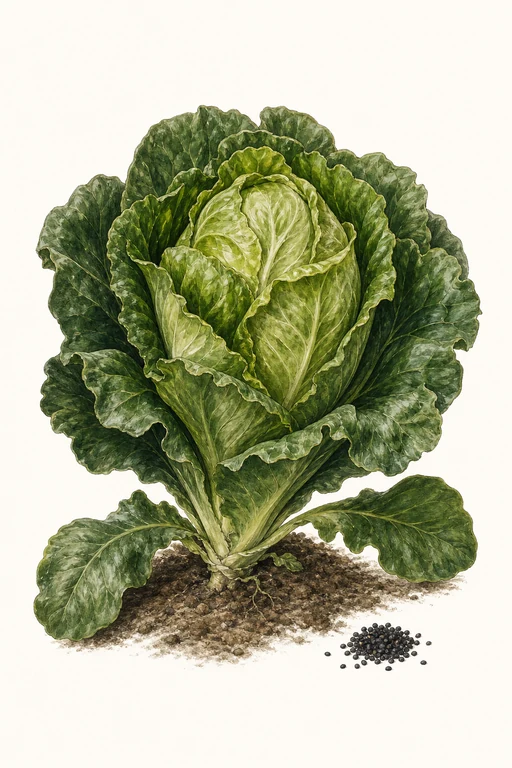
Black Seeded Simpson
Lettuce
🌱 45d to harvest
Rosette
Sink your senses into Black Seeded Simpson’s tender, buttery leaves—cool, crisp, and delicately sweet with a clean, garden-fresh …
Crop Dates
| Milestone | Date |
|---|---|
| Start Indoors | Direct Sow |
| Last Frost | Jan 1st |
| Transplant / Sow Outdoors | Dec 25th |
| Harvest Begins | Feb 8th |
| Harvest Ends | Dec 31st |
Crop Details
| Trait | Value |
|---|---|
| Days to Maturity | 45 |
| Sun Requirements | Part Sun |
| Growth Habit | Rosette |
| Support Needed | None |
| Planting Depth | Surface |
| Germination Temp (°F) | 70 |
| Min Soil Temp (°F) | 40 |
| Min Night Temp (°F) | 35 |
| Harden Off (days) | 5 |
Recommended Companions
Frequently Asked Questions
How do I prevent and treat lettuce downy mildew (and similar fungal issues) on Black Seeded Simpson?
Watch for yellow-green patches on leaf tops and a grayish-purple fuzzy growth on the undersides—especially after cool, humid, damp mornings. Remove and discard the worst leaves, improve airflow by spacing plants a bit more, and water at the base in the morning so foliage stays dry. If it keeps spreading, use a labeled fungicide that targets downy mildew on edible leafy greens and follow the label’s reapplication interval.
How often should I water Black Seeded Simpson during the main growing phase (after germination)?
Keep the soil evenly moist but not soggy from transplanting/germination through leaf formation, typically watering about 1–2 times per week depending on heat and soil. Aim for topsoil that feels lightly moist 1 inch down—drying all the way out causes bitter, bolting-prone lettuce, while constant wetness invites fungal problems. In warm spells, you may need brief, more frequent waterings to maintain that “damp, not wet” condition.
How can I tell when Black Seeded Simpson is ready to harvest at about 45 days?
Harvest when the outer leaves are full-sized and reach your desired size (often around 4–6 inches) and before the center begins to elongate or bolt. You can do “cut-and-come-again” by snipping outer leaves for multiple harvests, or take the whole head/rosette when it’s evenly filled. If leaves taste increasingly bitter or you see a tall flower stalk starting, harvest immediately.