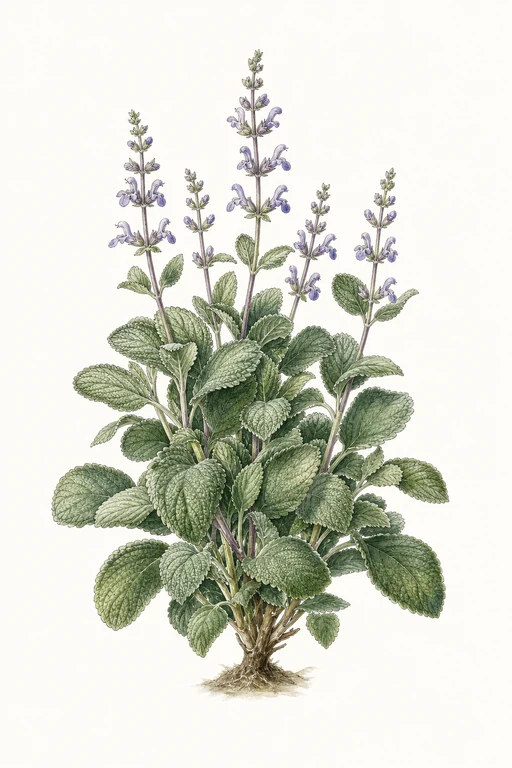
Broadleaf
Sage
🌱 70d to harvest
Upright
Fragrant and velvety, Broadleaf Sage fills the garden with a deep, herbaceous aroma and delivers broad, softly quilted leaves tha…
Crop Dates
| Milestone | Date |
|---|---|
| Start Indoors | Nov 20th |
| Last Frost | Jan 1st |
| Transplant / Sow Outdoors | Feb 26th |
| Harvest Begins | May 7th |
| Harvest Ends | Dec 31st |
Crop Details
| Trait | Value |
|---|---|
| Days to Maturity | 70 |
| Sun Requirements | Full Sun |
| Growth Habit | Upright |
| Support Needed | None |
| Planting Depth | Normal |
| Germination Temp (°F) | 70 |
| Min Soil Temp (°F) | 60 |
| Min Night Temp (°F) | 50 |
| Harden Off (days) | 7 |
Recommended Companions
Frequently Asked Questions
Why are my broadleaf leaves developing white, powdery patches and curling—what’s the fix?
Powdery mildew is common on broadleaf when days are warm and nights are cool, especially with poor airflow. Remove the most affected leaves, avoid overhead watering, and water at the soil line; then apply a label-approved fungicide or insecticidal soap only if the label allows it for powdery mildew and follow the recommended reapplication interval. Space plants to improve airflow and keep foliage dry as much as possible.
How often should I water broadleaf during the main growth phase (to day ~70)?
Water so the top 1–2 inches of soil dry slightly between waterings, then soak deeply to encourage roots—typically every 2–4 days depending on heat and soil texture. Use a moisture check: if the soil is cool and damp at 1–2 inches, wait; if it feels dry and crumbly, water. Keep moisture steady—alternating drought and heavy soaking can stunt growth and worsen leaf issues.
How can I tell when broadleaf is ready to harvest at around 70 days?
Harvest when plants reach full size and the lower leaves are fully expanded but not prematurely yellowing, with leaf color looking consistent and healthy. If you’re growing broadleaf for tender leaves, pick the outer leaves first when they’re thick and flexible; for larger mature leaves, wait until the leaves hold their shape and have the expected size for your variety. Avoid harvesting after leaves begin to look tough or overly pale, as quality drops quickly.