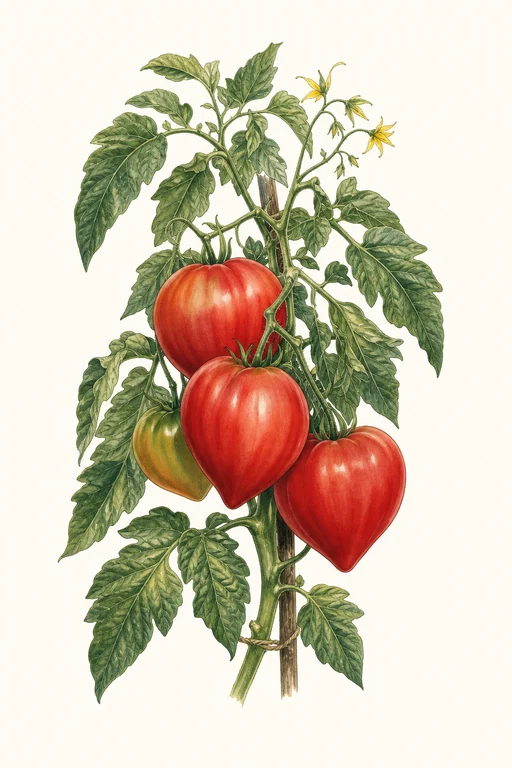
Cuor Di Bue
90d to harvest
Sink your spoon into the promise of Cuor Di Bue: a richly hued oxheart tomato with a velvety, meaty interior and a sweet, sun-forward flavor that lingers like warm fruit. At maturity, the fruits develop into large, heart-shaped beauties with a smooth, satin skin and a satisfying, sliceable heft—ideal for showcasing in bold, tomato-forward preparations. Grow Cuor Di Bue for thick-walled, low-seed richness that shines in fresh salads, hearty sauces, and slow-simmered favorites.
Crop Dates
Growing note: Frost-free Zone 11b supports continuous outdoor production.
| Milestone | Date |
|---|---|
| Climate | Frost-Free Climate |
| Growing Approach | Continuous Production |
Crop Details
| Trait | Value |
|---|---|
| Days to Maturity | 90 |
| Sun Requirements | Full Sun |
| Growth Habit | Indeterminate |
| Support Needed | Cage |
| Planting Depth | Deep |
| Germination Temp (°F) | 75 |
| Min Soil Temp (°F) | 60 |
| Min Night Temp (°F) | 50 |
| Harden Off (days) | 9 |
Recommended Companions
Frequently Asked Questions
What’s the most common disease issue for Solanum lycopersicum (oxheart type) and how can I prevent it?
Oxheart tomatoes commonly suffer from early blight (Alternaria), which shows up as dark, concentric rings on older leaves and gradually spreads upward. Space plants with good airflow, water at the soil line (not the leaves), and remove yellowing/lower infected leaves as soon as symptoms appear. If it keeps worsening, switch to a labeled tomato fungicide regimen and avoid harvesting or pruning when foliage is wet to reduce spread.
How often should I water Solanum lycopersicum during the main growing phase?
During active flowering and fruit set, keep soil evenly moist—typically about 1–2 inches (2.5–5 cm) of water per week, adjusting for heat and container size. Water deeply 1–3 times per week rather than frequent light watering, and aim for the top 1 inch (2–3 cm) of soil to dry slightly between waterings. Consistent moisture helps prevent blossom-end rot and cracking, which are more likely with irregular watering.