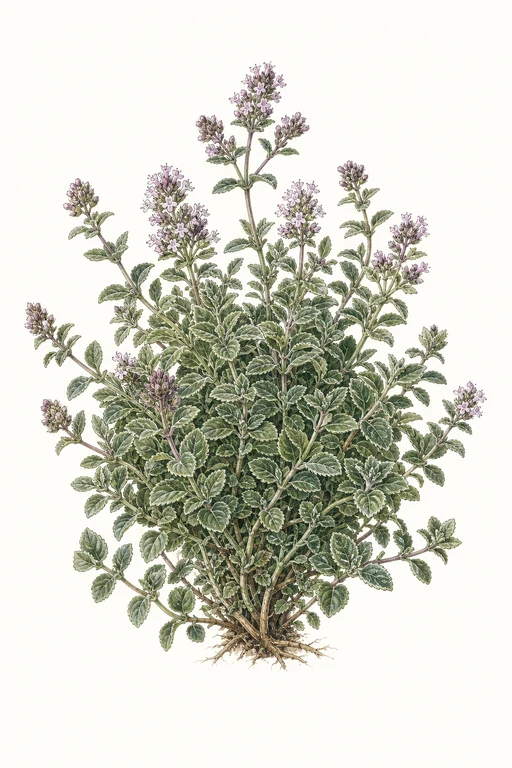
Greek
Oregano
🌱 60d to harvest
Upright
Fragrant as a sun-warmed hillside, Greek oregano releases a bright, resinous aroma with a peppery, gently minty bite. The foliage…
Crop Dates
| Milestone | Date |
|---|---|
| Start Indoors | Dec 4th |
| Last Frost | Jan 1st |
| Transplant / Sow Outdoors | Jan 1st |
| Harvest Begins | Mar 2nd |
| Harvest Ends | Dec 31st |
Crop Details
| Trait | Value |
|---|---|
| Days to Maturity | 60 |
| Sun Requirements | Full Sun |
| Growth Habit | Upright |
| Support Needed | None |
| Planting Depth | Surface |
| Germination Temp (°F) | 70 |
| Min Soil Temp (°F) | 45 |
| Min Night Temp (°F) | 35 |
| Harden Off (days) | 7 |
Recommended Companions
Frequently Asked Questions
What’s the most common pest or disease on Origanum vulgare subsp. hirtum (Greek oregano), and how do I treat it?
Greek oregano (Origanum vulgare subsp. hirtum) is especially prone to root rot and crown issues when soil stays wet, often showing up as wilting or blackened stems at the base. Water only when the top 1–2 cm of soil is dry, plant in well-draining soil, and remove any plants with obvious crown/root collapse. If you spot leaf spots plus damp conditions, improve airflow by thinning and avoid overhead watering; in severe cases, replace affected plants to prevent spread.
How often should I water Greek oregano during the main growing phase?
During active growth, water deeply but infrequently—typically when the top 1–2 cm of soil dry out, which is often about once or twice per week depending on heat and soil. Aim for evenly moist conditions only in the first establishment weeks; once established, keep it on the drier side because oregano (Lamiaceae) tolerates drought better than soggy soil. Reduce watering noticeably as days shorten near maturity to prevent rot.
How can I tell when Greek oregano is ready to harvest (about 60 days)?
Harvest when plants are well-established and the shoots have reached vigorous growth—usually around 60 days from sowing—with stems firm and leaves fully formed. Snip just above a leaf pair to encourage branching, and avoid cutting into old, woody stems. If flowers start to form, you can still harvest, but flavor is usually best right before flowering when the foliage is most aromatic.