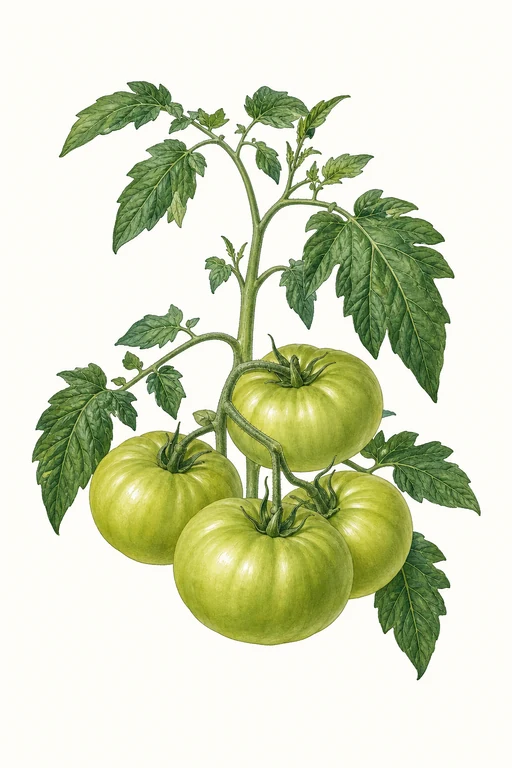
Green Giant
Tomato
🌱 85d to harvest
Indeterminate
Sink your teeth into Green Giant’s lush, juicy slices—an inviting balance of bright, green-tinted sweetness and a gentle, tomato-…
Crop Dates
| Milestone | Date |
|---|---|
| Start Indoors | Nov 6th |
| Last Frost | Jan 1st |
| Transplant / Sow Outdoors | Feb 26th |
| Harvest Begins | May 22nd |
| Harvest Ends | Dec 31st |
Crop Details
| Trait | Value |
|---|---|
| Days to Maturity | 85 |
| Sun Requirements | Full Sun |
| Growth Habit | Indeterminate |
| Support Needed | Stake |
| Planting Depth | Deep |
| Germination Temp (°F) | 75 |
| Min Soil Temp (°F) | 60 |
| Min Night Temp (°F) | 50 |
| Harden Off (days) | 10 |
Recommended Companions
Frequently Asked Questions
What pest or disease is most common on Solanum lycopersicum (tomatoes) like ‘Green Giant,’ and how can I manage it?
A very common issue is early blight (Alternaria), which shows as dark, concentric spots on lower leaves that spread upward. Remove and discard infected leaves, avoid overhead watering, and improve airflow by spacing plants; for ongoing pressure, use a labeled fungicide that targets early blight and rotate products to prevent resistance. If you see rapid leaf yellowing and collapse, check for fungal wilt conditions and remove badly affected plants to protect the rest of the row.
During the main growing phase, how often should I water my Solanum lycopersicum, and what soil moisture target should I maintain?
Water deeply so the root zone stays evenly moist, aiming for about 1–2 inches (2.5–5 cm) of water per week depending on heat and rainfall. In full sun, check soil moisture in the top 1–2 inches (2.5–5 cm): if it’s dry there, irrigate thoroughly; if it’s still moist, wait to avoid fluctuating moisture that can trigger blossom-end rot. Mulch around the stems to keep moisture consistent and reduce leaf wetness.
How can I tell when Solanum lycopersicum is ready to harvest (around 85 days to maturity)?
Harvest when fruits reach full size and have a firm, glossy skin with a uniform green turning to mature color for your variety; taste should be sweet and tomato-like rather than tangy. For the best eating quality, pick by the stem at peak firmness—avoid waiting until the fruit is soft or splitting. If nights are cool or light is low, you may need to let fruits stay on the vine a bit longer, checking daily for color and firmness.