
Jarrahdale
Pumpkin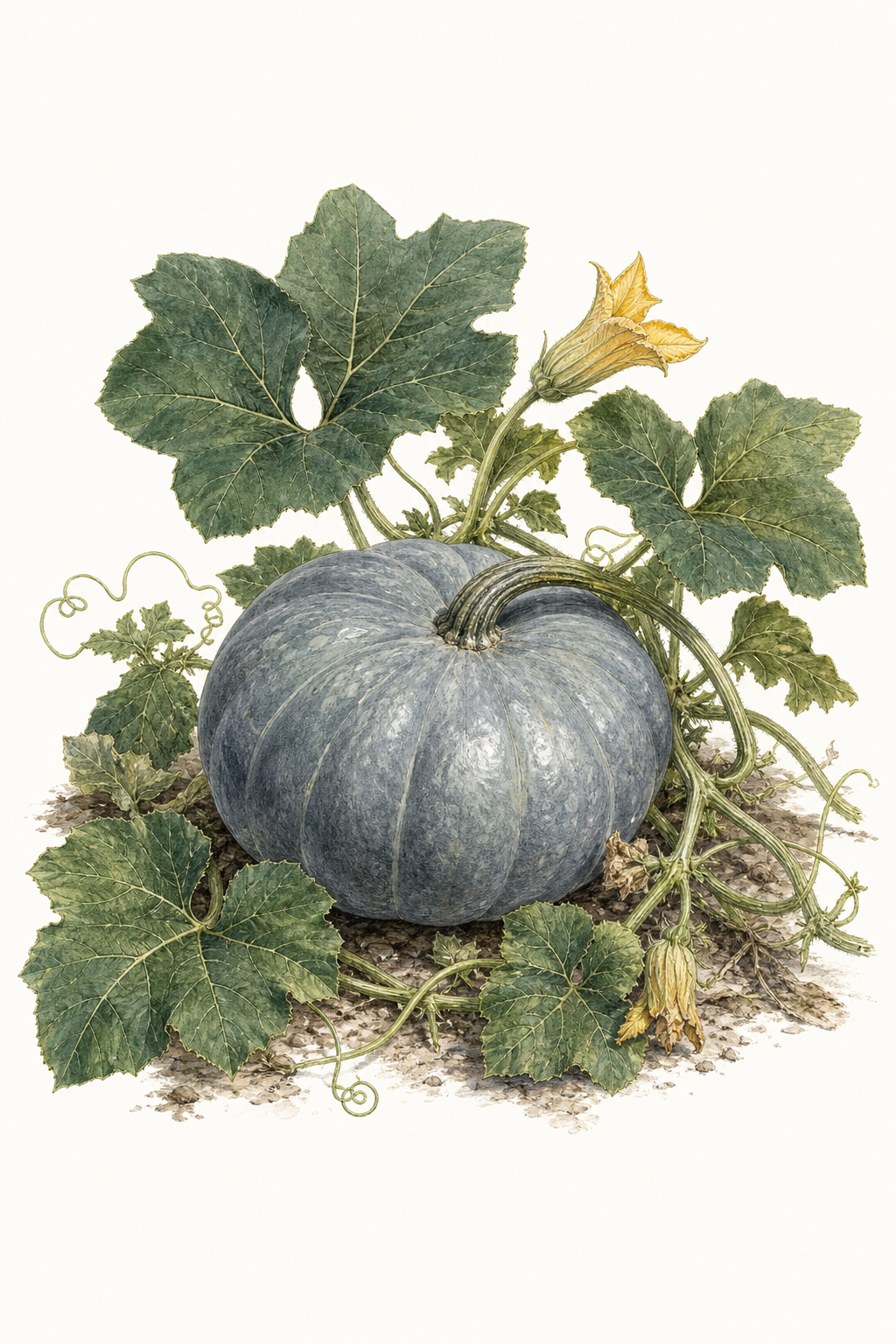
Sink your senses into Jarrahdale’s velvety, slate-blue skin—an elegant, dusted rind that feels almost powder-soft at first touch.…
Crop Dates
| Milestone | Date |
|---|---|
| Start Indoors | Feb 12th |
| Last Frost | Jan 1st |
| Transplant / Sow Outdoors | Feb 26th |
| Harvest Begins | Jun 11th |
| Harvest Ends | Dec 31st |
Crop Details
| Trait | Value |
|---|---|
| Days to Maturity | 105 |
| Sun Requirements | Full Sun |
| Growth Habit | Vine |
| Support Needed | Trellis |
| Planting Depth | Normal |
| Germination Temp (°F) | 80 |
| Min Soil Temp (°F) | 65 |
| Min Night Temp (°F) | 55 |
| Harden Off (days) | 10 |
Recommended Companions
Frequently Asked Questions
What pest or disease most often affects Cucurbita maxima (Jarrahdale) and how can I control it in a home garden?
How often should I water Jarrahdale squash during the main growing phase, and what soil moisture level should I aim for?
How do I tell when Jarrahdale (Cucurbita maxima) is ready to harvest?
Sink your senses into Jarrahdale’s velvety, slate-blue skin—an elegant, dusted rind that feels almost powder-soft at first touch. Inside, the flesh turns a rich, warm butter-yellow with a fine, dense texture that roasts to a smooth, spoonable consistency and shines in hearty purées, soups, and pies. A dependable 105-day pumpkin for gardeners who love a dramatic harvest and versatile, comforting flavor from one standout variety.
Sowing Tips

Transplant Conditions
Wait until soil reaches 65°F and nights stay above 55°F before moving outdoors. Harden off for 10 days first.

Direct Sow Preferred
Sensitive roots — does not transplant well. If starting indoors, use biodegradable pots and disturb roots as little as possible when moving outdoors.
Expert Note

Start seeds only if you can transplant with minimal root disturbance; otherwise direct-sow after soil warms, because Jarrahdale is a frost-sensitive cucurbit.