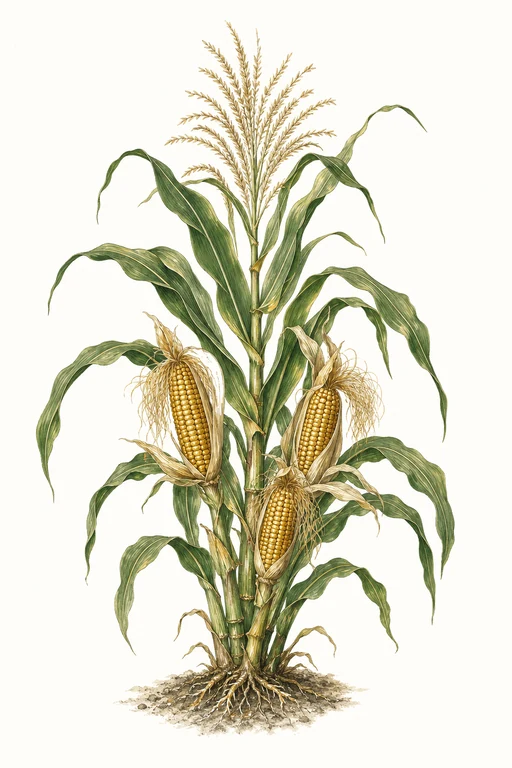
Kettle Corn
Corn
🌱 90d to harvest
Upright
Sweet, nutty fragrance rises from the kernels as they heat—Kettle Corn is bred for that classic “just-popped” aroma with a balanc…
Crop Dates
| Milestone | Date |
|---|---|
| Start Indoors | Direct Sow |
| Last Frost | Jan 1st |
| Transplant / Sow Outdoors | Jan 1st |
| Harvest Begins | Apr 1st |
| Harvest Ends | Dec 31st |
Crop Details
| Trait | Value |
|---|---|
| Days to Maturity | 90 |
| Sun Requirements | Full Sun |
| Growth Habit | Upright |
| Support Needed | None |
| Planting Depth | Normal |
| Germination Temp (°F) | 60 |
| Min Soil Temp (°F) | 55 |
| Min Night Temp (°F) | 50 |
| Harden Off (days) | Not Required |
Recommended Companions
Frequently Asked Questions
What pest is most likely to damage Zea mays var. saccharata (sweet corn), and how can I control it?
Earworms (corn earworm/bollworm) commonly bore into sweet corn ears, leaving frass and ragged silks. Check daily once silks emerge, remove and discard damaged ears, and apply Bacillus thuringiensis (Bt) targeted to corn earworm when silks are fresh (repeat as directed on the label). Keep the area weeded and avoid letting late ears sit longer than necessary, since damaged ears attract more moths.
How often should I water sweet corn during the main growing phase?
During tassel and ear development, keep the soil consistently moist with about 1–1.5 inches (2.5–4 cm) of water per week, adjusted for rainfall. Water deeply 2–3 times per week rather than frequent light sprinkling, so moisture reaches the deeper root zone. If the soil dries and ears begin to form, pollination suffers—aim for even moisture from silking through early kernel fill.
How do I tell when sweet corn is ready to harvest (Zeа mays var. saccharata)?
Harvest when silks turn brown and dry but are still on the ear, and the kernels look plump and glossy at the tip to the base. Do a “milk test”: press a kernel—if a milky fluid squirts out, it’s harvest-ready; if only a clear watery juice appears, wait about 1 day. For peak sweetness, pick in the morning and use promptly, since sugar in sweet corn declines quickly after harvest.