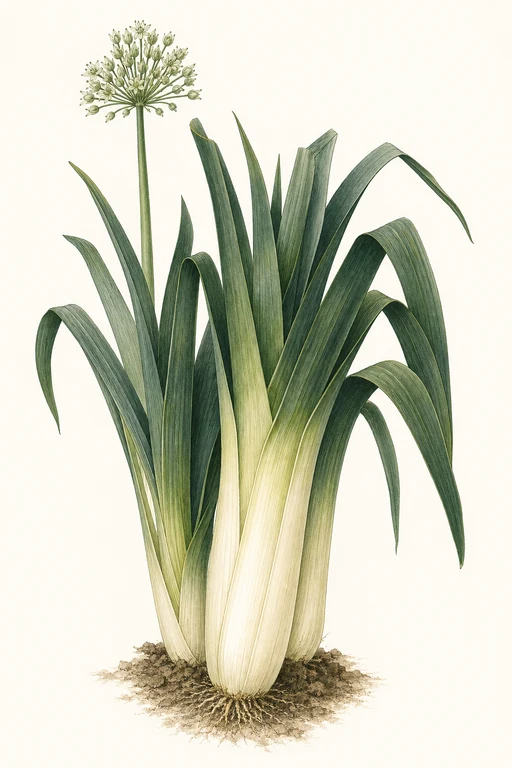
Musselburgh
Leek
🌱 120d to harvest
Upright
Sweetly mild and richly savory, Musselburgh leeks offer a tender, buttery bite with a pale, creamy core that feels smooth and sub…
Crop Dates
| Milestone | Date |
|---|---|
| Start Indoors | Oct 23rd |
| Last Frost | Jan 1st |
| Transplant / Sow Outdoors | Dec 25th |
| Harvest Begins | Apr 24th |
| Harvest Ends | Dec 31st |
Crop Details
| Trait | Value |
|---|---|
| Days to Maturity | 120 |
| Sun Requirements | Full Sun |
| Growth Habit | Upright |
| Support Needed | None |
| Planting Depth | Normal |
| Germination Temp (°F) | 70 |
| Min Soil Temp (°F) | 45 |
| Min Night Temp (°F) | 35 |
| Harden Off (days) | 6 |
Recommended Companions
Frequently Asked Questions
What pest or disease commonly affects Allium ampeloprasum var. porrum (Musselburgh leeks), and how do I control it?
Leeks are especially prone to leek rust (Puccinia allii), which shows as orange-brown pustules on the leaves, and it spreads quickly in warm, humid weather. Remove and destroy heavily infected leaves, improve airflow (avoid crowding), and water at the soil line rather than overhead to keep foliage drier. If it’s recurring, start the next crop with fresh bed areas and use resistant planting stock where available.
How often should I water Musselburgh leeks during the main growing period?
During active leaf growth (most of the ~120 days), keep the planting bed consistently evenly moist—aim for soil that feels like a wrung-out sponge at 2–3 inches deep. Water about 1–2 times per week depending on weather, and increase frequency during hot, dry spells to prevent the thin, woody stems/leaves typical of drought stress. Mulch helps maintain moisture, but avoid waterlogging because leeks dislike soggy soil.
How can I tell when Musselburgh leeks are ready to harvest?
Harvest when plants reach mature thickness for your bed spacing—typically when stems are firm and substantial, often around 100–120 days from transplanting for many home schedules. Look for well-developed, blanched (or soil-covered) bases and sturdy green tops that don’t look collapsed or overly thin. You can harvest selectively as needed, pulling gently and keeping roots intact for easier storage.