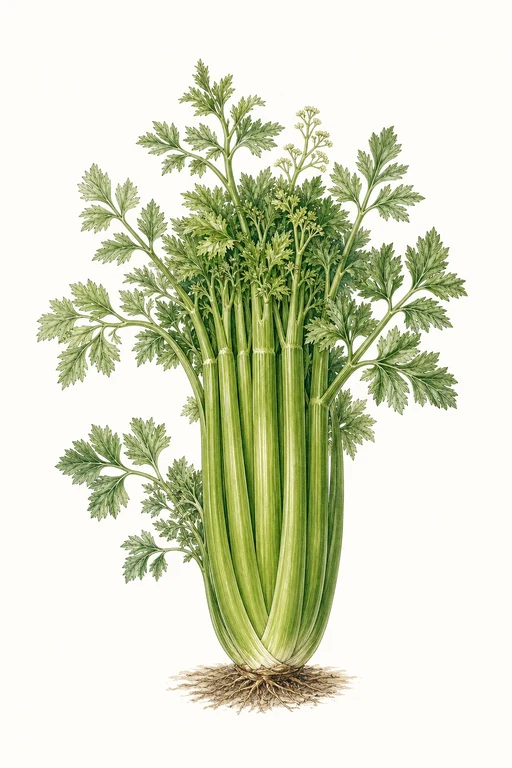
Prinz
Celery
🌱 90d to harvest
Rosette
Fragrant and richly sweet, Prinz celery forms crisp, tender stalks that feel cool and clean in the hand—an inviting crunch with a…
Crop Dates
| Milestone | Date |
|---|---|
| Start Indoors | Oct 23rd |
| Last Frost | Jan 1st |
| Transplant / Sow Outdoors | Jan 1st |
| Harvest Begins | Apr 1st |
| Harvest Ends | Dec 31st |
Crop Details
| Trait | Value |
|---|---|
| Days to Maturity | 90 |
| Sun Requirements | Part Sun |
| Growth Habit | Rosette |
| Support Needed | None |
| Planting Depth | Normal |
| Germination Temp (°F) | 70 |
| Min Soil Temp (°F) | 45 |
| Min Night Temp (°F) | 35 |
| Harden Off (days) | 6 |
Recommended Companions
Frequently Asked Questions
What pest or disease most often affects celery (Apium graveolens var. dulce), and how can I manage it?
Celery commonly suffers from leaf spot/early blight-type fungal issues (often worsened by crowded plants and wet foliage). Water at the soil line, space plants so air can move, and remove the worst affected leaves; for fast protection, apply a labeled copper-based fungicide when you first see spotting and repeat as directed. Keep beds free of debris because spores overwinter on plant residue.
How often should I water sweet celery during the main growing phase, and what soil moisture level should I maintain?
During the main growth (after seedlings establish and until harvest), keep the soil consistently evenly moist—typically about 1–2 inches of water per week depending on heat and rainfall. Let the top 1 inch of soil start to dry slightly, but don’t allow the root zone to fully dry out, since celery becomes stringy and can bolt when stressed. Mulch around plants to reduce moisture swings.
How do I know when sweet celery (Apium graveolens var. dulce) is ready to harvest?
Harvest around 90 days from sowing/transplanting when stalks are firm, crisp, and reach a usable size (generally thicker stalks with a solid base). Cut outer stalks first if you want ongoing production, or harvest the whole plant when the center stalks are also developed and the plant forms a tight, upright head. Avoid waiting until stalks become overly tall and hollow-feeling, which can indicate quality decline.