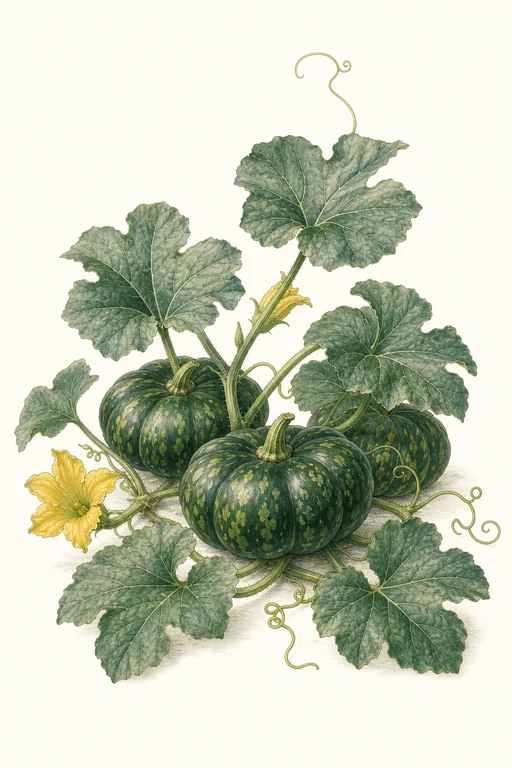
Sweet Mama
95d to harvest
Sink your spoon into Sweet Mama’s velvety, deep-orange flesh—richly sweet with a warm, nutty perfume that lingers like browned butter. This buttercup squash forms a compact, tidy plant and produces squat, fluted fruits with a satin, dark-green skin that turns invitingly mottled at maturity. Grow Sweet Mama for roasting-pan caramelization, hearty soups and purees, and beautifully spoonable sides that shine in autumn tables.
Crop Dates
Growing note: Frost-free Zone 11b supports continuous outdoor production.
| Milestone | Date |
|---|---|
| Climate | Frost-Free Climate |
| Growing Approach | Continuous Production |
Crop Details
| Trait | Value |
|---|---|
| Days to Maturity | 95 |
| Sun Requirements | Full Sun |
| Growth Habit | Vine |
| Support Needed | Trellis |
| Planting Depth | Normal |
| Germination Temp (°F) | 75 |
| Min Soil Temp (°F) | 65 |
| Min Night Temp (°F) | 55 |
| Harden Off (days) | 10 |
Frequently Asked Questions
What pest or disease most commonly affects Cucurbita maxima (Sweet Mama), and how do I manage it?
Cucurbita maxima is commonly hit by squash vine borers, which cause sudden wilting and holes/chewing in the vine. Start by placing floating row cover over seedlings until flowering, then inspect vines weekly and cut out/collar-dress affected sections, covering exposed stem with soil to encourage new roots. If powdery mildew appears later, improve airflow by spacing plants and watering at the base, then remove heavily infected leaves early to slow spread.
How often should I water Sweet Mama during the main growing phase, and what soil moisture level should I aim for?
During active vine growth and fruit filling, keep soil evenly moist but not waterlogged—typically about 1–2 inches (2.5–5 cm) of water per week depending on heat and soil, applied at the base. Let the top 1 inch (2.5 cm) dry slightly between deep waterings so roots get oxygen while still supporting continuous growth.
How can I tell when Sweet Mama (Cucurbita maxima) is ready to harvest?
Harvest when the rind is fully hard (you can’t easily dent it with a fingernail) and the fruit has reached its full color typical for the variety, usually around 95 days. The stem should be dry and starting to cork, and the skin should resist scratches; cut with a short stem and cure in warm, dry air for better storage.