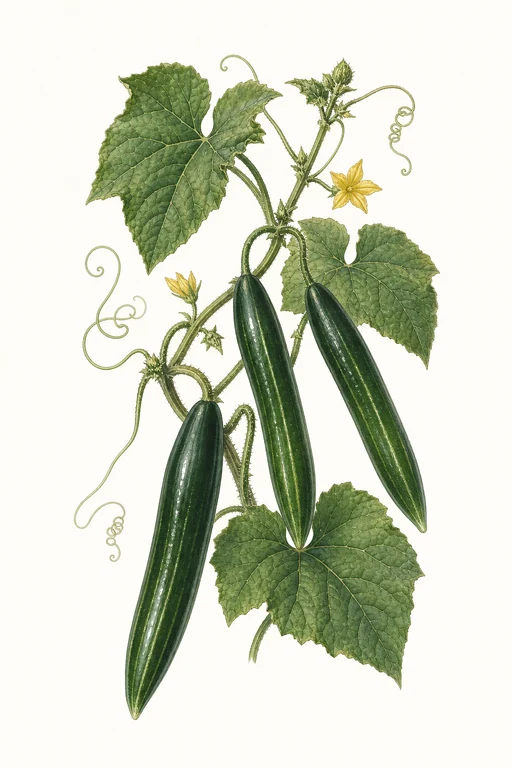
Tanja
Cucumber
🌱 52d to harvest
Vine
Crisp as morning dew, Tanja Beit Alpha cucumbers bring a bright, clean snap with a subtly sweet, fresh flavor and a tender, thin …
Crop Dates
| Milestone | Date |
|---|---|
| Start Indoors | Jan 1st |
| Last Frost | Jan 1st |
| Transplant / Sow Outdoors | Jan 15th |
| Harvest Begins | Mar 8th |
| Harvest Ends | Dec 31st |
Crop Details
| Trait | Value |
|---|---|
| Days to Maturity | 52 |
| Sun Requirements | Full Sun |
| Growth Habit | Vine |
| Support Needed | Trellis |
| Planting Depth | Normal |
| Germination Temp (°F) | 70 |
| Min Soil Temp (°F) | 65 |
| Min Night Temp (°F) | 55 |
| Harden Off (days) | 12 |
Recommended Companions
Frequently Asked Questions
What’s a common pest problem for Cucumis sativus (cucumber) and how can I control it early?
Cucumber beetles are a top issue for Cucumis sativus and can spread bacterial wilt. Check leaves and stems daily for small yellow/green beetles and feeding scars, then use row cover after sowing until flowering to prevent egg laying. If you see active feeding, apply an insecticidal soap to the undersides of leaves and re-check every 2–3 days for reinfestation.
How often should I water cucumber (Cucumis sativus) during peak growth, and what soil moisture should I maintain?
During the main growing phase (vining and fruit set), keep the soil consistently moist but not waterlogged—aim for the top 1 inch to stay evenly damp. Water deeply about 1–2 times per week depending on heat, and increase to more frequent watering during hot, windy weather so cucumbers don’t dry out between rains. Mulch around plants to reduce moisture swings that can trigger bitter fruit and uneven growth.
How do I tell when Cucumis sativus is ready to harvest?
Harvest when fruits are firm, reach the typical target size for your plants, and have a glossy skin—use a gentle tug; cucumbers should detach easily with a short stem. Start checking around the middle of the 50-day window (about day 45–52) and harvest regularly because leaving overripe cucumbers on the vine reduces new flowering and makes later fruits smaller.