SproutSmart
SproutSmart Intelligent Garden Sowing

The Student

Parsnip

Planting Schedule

Add The Student to your garden to build a schedule and get reminders.
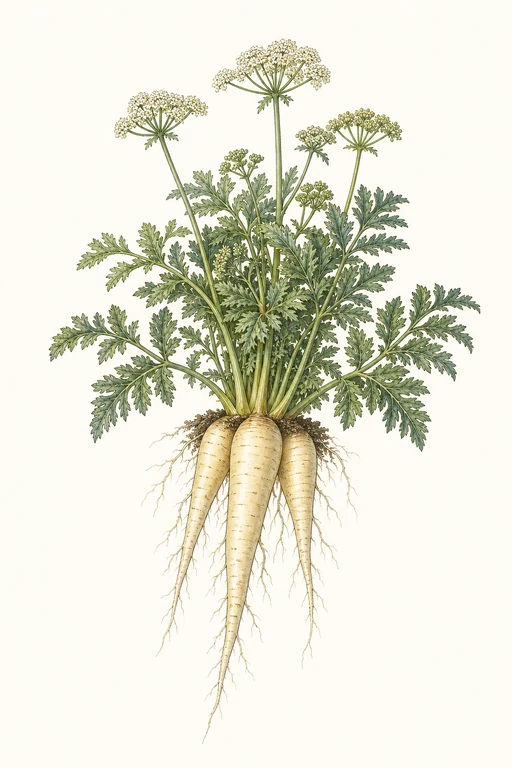
Botanical illustration of The Student
110d to harvest

Sweet, honeyed fragrance rises from the soil as “The Student” parsnips mature—an inviting aroma that feels like autumn in bloom. The roots develop into long, tapered forms with smooth, creamy skin and a tender, fine-grained bite that turns especially luscious when roasted, while also shining fresh in salads and slaws. Grow “The Student” for dependable, classroom-straight roots and a versatile harvest that lends itself beautifully to soups, purées, and pickling brine.

Crop Dates

Growing note: In frost-free Zone 11b, grow this cool-season crop during the cooler dry season (October–February).
MilestoneDate
Start Indoors
ClimateFrost-Free Climate
Transplant / Sow OutdoorsOct 1st
Harvest BeginsJan 19th
Harvest EndsFeb 28th

Crop Details

TraitValue
Days to Maturity110
Sun RequirementsFull SunFull sun
Growth HabitTaproot
Support NeededNone
Planting DepthNormal
Germination Temp (°F)55
Min Soil Temp (°F)45
Min Night Temp (°F)28
Harden Off (days)Not Required

Frequently Asked Questions


What disease commonly affects Pastinaca sativa (parsnip), and how can I prevent it in my garden?
Parsnips commonly develop Alternaria leaf blight/leaf spots, which start as small brown lesions on older leaves and can spread during warm, humid weather. Remove and destroy infected foliage early, avoid overhead watering, and improve airflow by thinning to the recommended spacing so leaves dry quickly. If you have recurring outbreaks, use fresh, well-drained beds and don’t plant Apiaceae (like parsnip/carrots/celery) in the same spot for at least 3–4 years.
How often should I water Pastinaca sativa during active root growth, and what soil moisture level should I maintain?
During the main growing phase (roughly the first 8–10 weeks after emergence through bulking), water deeply to keep the top 6–8 inches of soil consistently moist but not waterlogged. Typically this means about 1 inch of water per week, adjusted for rainfall and heat—more frequent light watering can lead to shallow, uneven roots. If the soil dries out between waterings, parsnips often become woody or split, so aim for steady moisture.
How do I tell when Pastinaca sativa is ready to harvest?
Harvest when roots reach the expected size for your bed space—often about 110 days after sowing—with the top of the root just lifting slightly above the soil line. Parsnips taste better after a light frost because starches increase, so you can leave them in the ground (protected by mulch) and harvest as needed. If the crowns start to get ragged or the roots fork, lift soon rather than waiting longer.
Botanical illustration of The Student

Sweet, honeyed fragrance rises from the soil as “The Student” parsnips mature—an inviting aroma that feels like autumn in bloom. The roots develop into long, tapered forms with smooth, creamy skin and a tender, fine-grained bite that turns especially luscious when roasted, while also shining fresh in salads and slaws. Grow “The Student” for dependable, classroom-straight roots and a versatile harvest that lends itself beautifully to soups, purées, and pickling brine.