SproutSmart
SproutSmart Intelligent Garden Sowing

Tidal Wave Cherry

Petunia
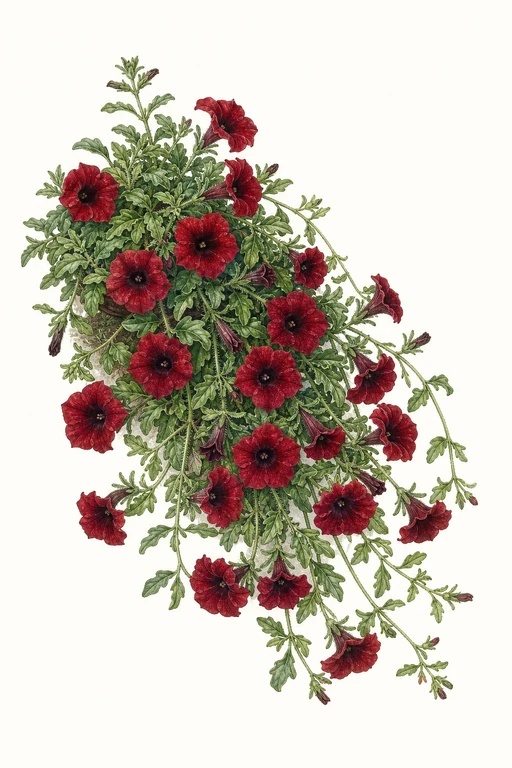
Botanical illustration of Tidal Wave Cherry
🌱 70d to harvest Spreading

A tidal surge of color spills over the edge—Tidal Wave Cherry blooms in velvety, cherry-red rosettes with a soft, luminous sheen …

Planting Schedule

Add Tidal Wave Cherry to your garden to build a schedule and get reminders.

Crop Dates

MilestoneDate
Start IndoorsDirect Sow
Last FrostJan 1st
Transplant / Sow OutdoorsJan 1st
Harvest BeginsMar 12th
Harvest EndsDec 31st

Crop Details

TraitValue
Days to Maturity70
Sun RequirementsFull SunFull sun
Growth HabitSpreading
Support NeededNone
Planting DepthSurface
Germination Temp (°F)70
Min Soil Temp (°F)60
Min Night Temp (°F)50
Harden Off (days)7

Frequently Asked Questions


What pest or disease is most likely on Petunia × atkinsiana (Tidal Wave type), and how can I treat it?
On petunias, watch for gray mold (Botrytis) and leaf blight after humid, wet weather—symptoms include gray fuzzy growth and dark, spreading leaf spots. Remove affected foliage, improve airflow by spacing plants, and avoid wetting leaves when watering; if it keeps recurring, treat with a labeled fungicide for Botrytis/leaf blight and repeat as directed on the label. Also check for aphids and whiteflies on new growth, and knock them off with a strong spray or treat with insecticidal soap if numbers build up.
How often should I water during the main growing phase for Petunia × atkinsiana?
During active growth (roughly after transplanting until about mid-season), keep the root zone evenly moist but not waterlogged—water when the top 1 inch of soil feels dry. In full sun, this often means watering about 1–2 times per week, but hot, windy conditions may require more frequent watering; the goal is consistent moisture to prevent bud drop and wilting. Ensure drainage is excellent so excess water can’t sit around the crown.
How do I know when Tidal Wave petunia is ready to “harvest” or cut back?
Petunia × atkinsiana is grown for continuous blooms rather than a one-time harvest, so “ready” means flowers are fully open and richly colored. Start deadheading as soon as blooms fade to trigger fresh flowering; you’ll notice new buds forming within a week or two after deadheading. If growth becomes leggy or flowering slows, cut plants back by about one-third to jump-start a new flush of blooms.
Botanical illustration of Tidal Wave Cherry

A tidal surge of color spills over the edge—Tidal Wave Cherry blooms in velvety, cherry-red rosettes with a soft, luminous sheen that catches the light like stained glass. The trailing habit forms a dense, spreading cascade, creating a plush carpet of flowers that stays showy through the season. Ideal for hanging baskets and window boxes, it delivers nonstop ornamental impact with a rich, romantic presence all its own.

Sowing Tips

Transplant Conditions

Wait until soil reaches 60°F and nights stay above 50°F before moving outdoors. Harden off for 7 days first.

Expert Note

Start petunias indoors for earlier bloom, but transplant only after nights are reliably warm to prevent stunting.