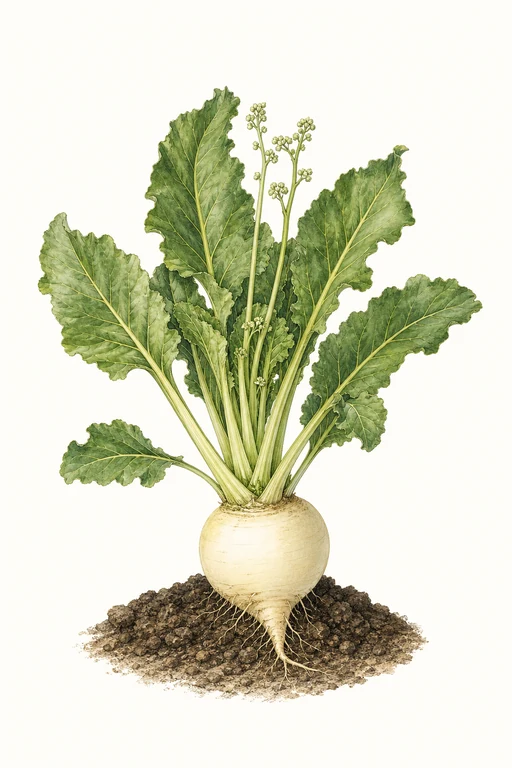
White Detroit
Beet
🌱 50d to harvest
Rosette
Silken-smooth white roots glow like pale ivory beneath the soil, tender and sweet with a mild, clean flavor that feels luminous r…
Crop Dates
| Milestone | Date |
|---|---|
| Start Indoors | Direct Sow |
| Last Frost | Jan 1st |
| Transplant / Sow Outdoors | Jan 1st |
| Harvest Begins | Feb 20th |
| Harvest Ends | Dec 31st |
Crop Details
| Trait | Value |
|---|---|
| Days to Maturity | 50 |
| Sun Requirements | Full Sun |
| Growth Habit | Rosette |
| Support Needed | None |
| Planting Depth | Normal |
| Germination Temp (°F) | 50 |
| Min Soil Temp (°F) | 40 |
| Min Night Temp (°F) | 28 |
| Harden Off (days) | Not Required |
Recommended Companions
Frequently Asked Questions
What pests or diseases commonly affect Beta vulgaris (white beet) like White Detroit, and how can I control them?
A frequent issue is Cercospora leaf spot, which shows up as tan to dark spots with yellowing around them; remove affected leaves and avoid wetting foliage during watering. For insect pressure, watch for aphids and leaf miners on beet foliage—rinse aphids off with a strong water jet and use insecticidal soap for repeat infestations (follow the label). Keep rows weeded and thin seedlings promptly to improve airflow around the crowns and leaves.
How often should I water White Detroit beets during the main growing phase, and what soil moisture level do they need?
During the main bulking period (roughly weeks 3–7), keep the soil consistently moist but not soggy: aim for about 1 inch (2.5 cm) of water per week, split into 2–3 waterings during hot spells. Dry-out followed by heavy watering can cause poor root texture, so water lightly and more frequently when the top 1 inch of soil dries. Mulch after seedlings are established to reduce surface drying, especially in full sun.
How can I tell when White Detroit beets are ready to harvest?
Harvest when roots reach about 2–3 inches (5–8 cm) in diameter, typically around 50 days from sowing for White Detroit. Another cue is the visible shoulder/pull-up near the soil line—when it’s developed fully and feels firm, they’re ready. Pull one test beet first; if it’s still small or woody, give the rest a bit more time.