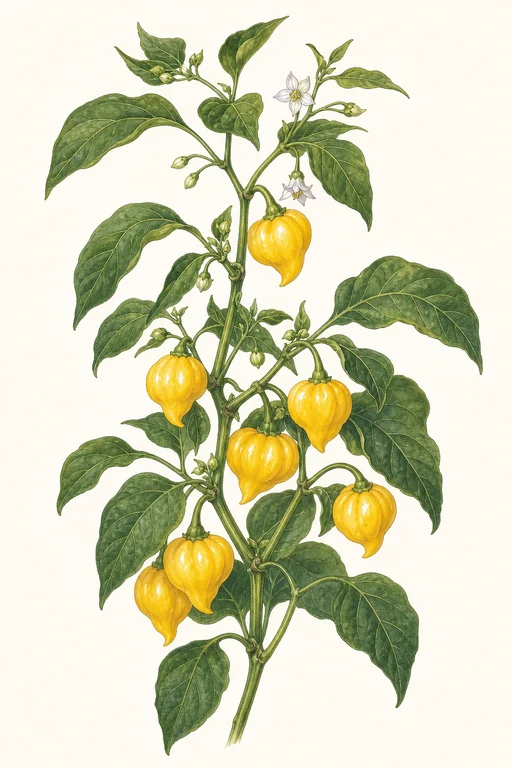
Yellow Scotch Bonnet
90d to harvest
Sunlit and daring, Yellow Scotch Bonnet ripens to a glossy, lantern-like yellow that catches the eye before it ever reaches the palate. The flesh is crisp and juicy with a bright, fruity heat that builds quickly—ideal for fresh salsas, bold sauces, and punchy pickling where you want flavor-forward fire. Grow it for 90 days of warm-season excitement, then enjoy peppers that stay vibrant and aromatic from garden to jar.
Crop Dates
Growing note: Frost-free Zone 11b supports continuous outdoor production.
| Milestone | Date |
|---|---|
| Climate | Frost-Free Climate |
| Growing Approach | Continuous Production |
Crop Details
| Trait | Value |
|---|---|
| Days to Maturity | 90 |
| Sun Requirements | Full Sun |
| Growth Habit | Bush |
| Support Needed | Stake |
| Planting Depth | Normal |
| Germination Temp (°F) | 80 |
| Min Soil Temp (°F) | 60 |
| Min Night Temp (°F) | 50 |
| Harden Off (days) | 10 |
Recommended Companions
Frequently Asked Questions
What pest or disease most commonly affects Capsicum chinense (yellow Scotch bonnet), and how do I fix it fast?
In home gardens, Capsicum chinense commonly gets aphids and broad mite infestations, which can stunt growth and cause leaf bronzing. Spray affected plants with insecticidal soap (especially undersides) and repeat every 5–7 days for 2–3 rounds; remove heavily damaged leaves. If you see wilting with dark stems or sudden collapse, suspect soil-borne issues and discard the worst plants to prevent spread, then avoid re-planting peppers in the same spot for at least a season.
How often should I water Yellow Scotch Bonnet during the main growing phase?
During the active growth and fruiting period, keep the root zone evenly moist but never waterlogged—aim for soil that feels like a wrung-out sponge 1 inch down. Water deeply about 2–3 times per week in warm weather (more often in hot, windy sites), then reduce slightly once fruits begin to mature to prevent blossom-end rot. Always water at the soil line to keep foliage dry and reduce fungal leaf spots.