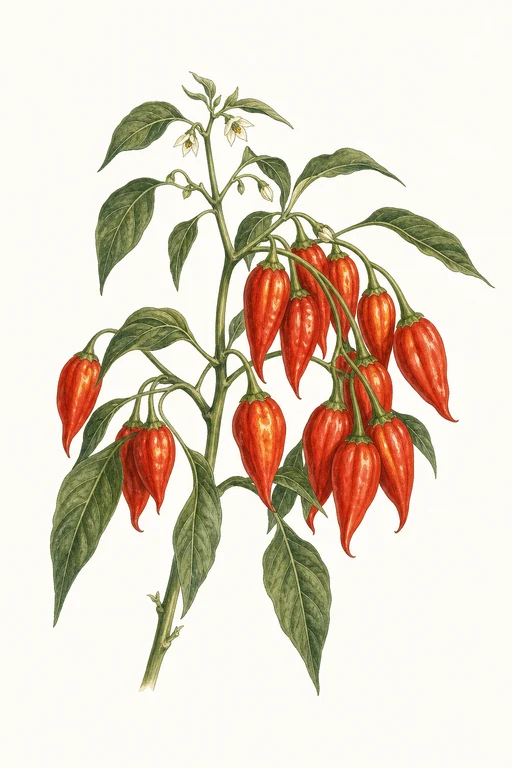
Aji Cito
Pepper
🌱 85d to harvest
Upright
Aji Cito arrives with a bright, lively heat that blooms quickly—fruity and tangy at first, then warming into a clean, lingering s…
Crop Dates
| Milestone | Date |
|---|---|
| Start Indoors | Nov 13th |
| Last Frost | Jan 1st |
| Transplant / Sow Outdoors | Feb 26th |
| Harvest Begins | May 22nd |
| Harvest Ends | Dec 31st |
Crop Details
| Trait | Value |
|---|---|
| Days to Maturity | 85 |
| Sun Requirements | Full Sun |
| Growth Habit | Upright |
| Support Needed | Stake |
| Planting Depth | Normal |
| Germination Temp (°F) | 80 |
| Min Soil Temp (°F) | 60 |
| Min Night Temp (°F) | 50 |
| Harden Off (days) | 10 |
Recommended Companions
Frequently Asked Questions
What pest or disease is most common on Capsicum baccatum (aji cito) and how can I control it?
Watch for spider mites and aphids, especially in hot, dry weather; they cause stippling and distorted new growth on Capsicum baccatum. Spray the undersides of leaves with a strong jet of water, then apply insecticidal soap and repeat every 5–7 days until you see no new damage. Also keep foliage dry and remove heavily infected leaves promptly to reduce fungal leaf spots.
How often should I water aji cito during the main growing phase, and what soil moisture level is ideal?
During active flowering and fruit set, keep the root zone consistently evenly moist—about 1–2 inches (2.5–5 cm) of water per week depending on heat and soil—without letting it stay soggy. Let the top 1 inch (2.5 cm) of soil dry slightly between waterings, then water deeply so moisture reaches the full pot/bed depth. Irregular watering is a common trigger for blossom-end issues and stunted fruiting in peppers.
How do I know when my aji cito (Capsicum baccatum) is ready to harvest?
Harvest when the pods reach the expected size (about 85 days from transplant) and the skin fully changes from green to its mature color, with a firm pod that feels crisp rather than soft. If you want heat and flavor, pick at full maturity rather than early green; fully ripened Capsicum baccatum pods typically have the strongest aroma. Use scissors or snips to avoid tearing the plant.