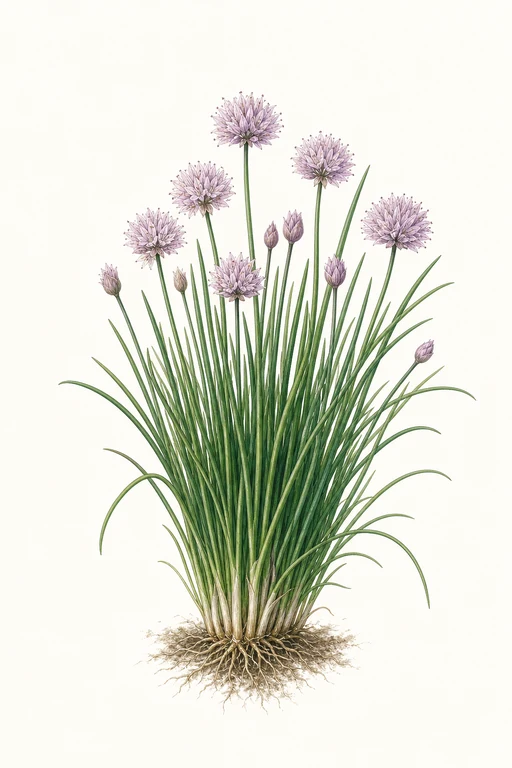
Common Chives
Chives
🌱 60d to harvest
Clumping
Fragrant, oniony blades rise in tidy clumps, offering a crisp, snappy bite and a vivid green that looks as fresh as it tastes. ‘C…
Crop Dates
| Milestone | Date |
|---|---|
| Start Indoors | Nov 20th |
| Last Frost | Jan 1st |
| Transplant / Sow Outdoors | Jan 1st |
| Harvest Begins | Mar 2nd |
| Harvest Ends | Dec 31st |
Crop Details
| Trait | Value |
|---|---|
| Days to Maturity | 60 |
| Sun Requirements | Full Sun |
| Growth Habit | Clumping |
| Support Needed | None |
| Planting Depth | Normal |
| Germination Temp (°F) | 70 |
| Min Soil Temp (°F) | 45 |
| Min Night Temp (°F) | 35 |
| Harden Off (days) | 7 |
Recommended Companions
Frequently Asked Questions
What pest or disease commonly affects Allium schoenoprasum (common chives), and how do I treat it?
Chives commonly suffer from onion thrips and leaf miner damage, which shows up as silvery streaks or blotches that slowly turn brown. Spray with insecticidal soap for thrips and remove heavily affected leaves; repeat every 5–7 days for 2–3 cycles. If you see soft, collapsing bases or yellowing with rotting at the soil line, it’s often fungal/bacterial rot—pull and discard affected plants, avoid overhead watering, and improve drainage before replanting in that spot.
How often should I water common chives during the main growing phase?
During active growth, keep the top 1 inch of soil lightly moist but never waterlogged—this usually means watering about 1–2 times per week depending on heat and soil. Water deeply at the base so the clumps soak, then let the surface dry slightly before the next watering. Consistent moisture prevents tough, weak growth, while soggy soil increases the risk of rot in chive crowns.
How can I tell when common chives are ready to harvest?
Harvest when individual hollow leaves are about 6–8 inches tall (often around 60 days from sowing), and when the clumps look full rather than sparse. Use scissors to cut 1–2 inches above the soil or just above the base of the leaf clusters, taking no more than about one-third of the foliage at a time. For best flavor, harvest before plants flower; once flower buds form, expect tougher leaves and a shift toward more flowering growth.