SproutSmart
SproutSmart Intelligent Garden Sowing

Darklet

Celeriac
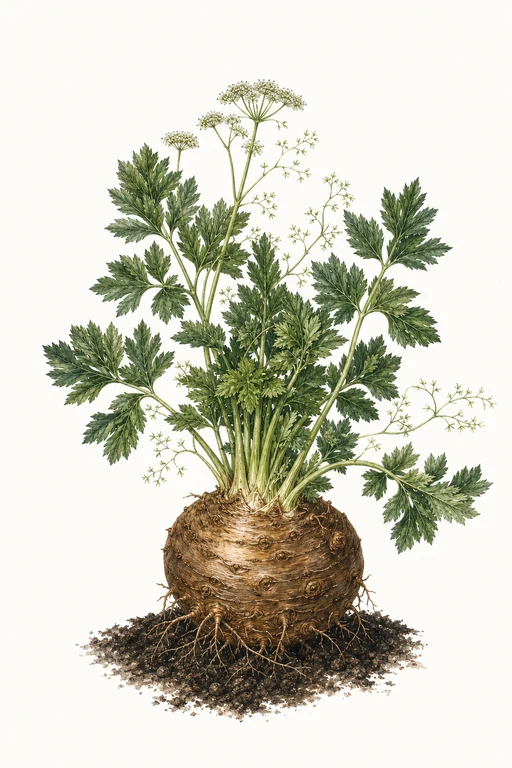
Botanical illustration of Darklet
🌱 120d to harvest Upright

Sink your spoon into Darklet’s dense, creamy heart—its flavor is richly nutty with a cool, celery-green brightness and a whisper …

Planting Schedule

Add Darklet to your garden to build a schedule and get reminders.

Crop Dates

MilestoneDate
Start IndoorsOct 23rd
Last FrostJan 1st
Transplant / Sow OutdoorsDec 25th
Harvest BeginsApr 24th
Harvest EndsDec 31st

Crop Details

TraitValue
Days to Maturity120
Sun RequirementsPart SunPartial sun
Growth HabitUpright
Support NeededNone
Planting DepthNormal
Germination Temp (°F)70
Min Soil Temp (°F)40
Min Night Temp (°F)35
Harden Off (days)6

Frequently Asked Questions


What pest or disease most commonly affects Apium graveolens var. rapaceum (celeriac), and how do I treat it?
Celery leaf spot and early blight–type leaf diseases can show up as brown spots on leaves, especially in warm, humid weather. Remove any heavily spotted leaves, water at the soil line (not over the foliage), and improve airflow by thinning if plants are crowded. If conditions stay wet, apply a labeled fungicide that’s approved for celery/celeriac use and follow the label timing—repeat only as directed.
How often should I water celeriac during the main growing phase, and what soil moisture level should I maintain?
From when seedlings establish until the bulb/hip starts swelling, keep soil consistently moist but not soggy—aim for the top 1–2 inches to stay evenly damp. In typical home gardens this often means watering about 1–2 times per week, increasing frequency during hot spells, while using enough water to wet the root zone. Avoid letting the soil fully dry out, because irregular moisture can lead to misshapen celeriac and poorer texture.
How can I tell when celeriac (Apium graveolens var. rapaceum) is ready to harvest?
Harvest at about 120 days from sowing/transplanting, or when the celeriac “bulb” reaches a firm, full size with a smooth, well-formed surface. The leaves should look strong and mostly intact; if frost hits, you can harvest right after the first light freezes for best flavor and tenderness. Use a spade to lift carefully and trim roots/leaves promptly to prevent drying.
Botanical illustration of Darklet

Sink your spoon into Darklet’s dense, creamy heart—its flavor is richly nutty with a cool, celery-green brightness and a whisper of sweetness. At maturity, this celeriac forms a broad, knobby crown with smooth, tight flesh that stays pleasantly firm, making it a standout for roasting, puréeing, and velvety sauces. Grow Darklet for a dependable, long-season harvest that rewards patience with a beautifully textured, spoon-ready root.

Sowing Tips

Transplant Conditions

Wait until soil reaches 40°F and nights stay above 35°F before moving outdoors. Harden off for 6 days first.

Expert Note

For Darklet’s very crisp leaves, keep it cool in spring/fall and avoid letting seedlings overheat or dry out.