
Giant Winter
Spinach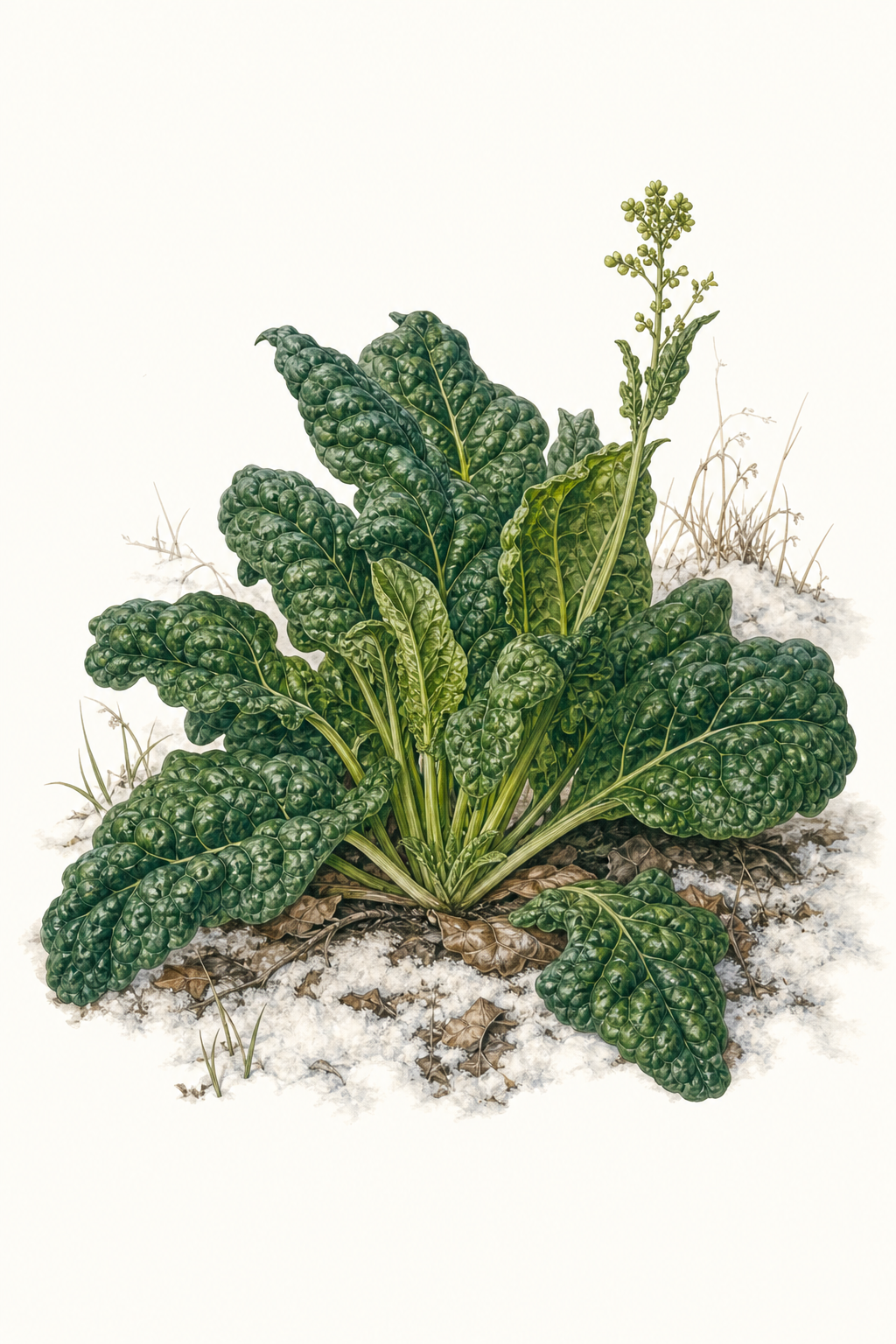
Sink your fingers into Giant Winter’s thick, savoyed leaves—crisp yet tender, with a deep, sweet-green flavor that lingers like f…
Crop Dates
| Milestone | Date |
|---|---|
| Start Indoors | Direct Sow |
| Last Frost | Jan 1st |
| Transplant / Sow Outdoors | Jan 1st |
| Harvest Begins | Feb 15th |
| Harvest Ends | Dec 31st |
Crop Details
| Trait | Value |
|---|---|
| Days to Maturity | 45 |
| Sun Requirements | Full Shade |
| Growth Habit | Rosette |
| Support Needed | None |
| Planting Depth | Normal |
| Germination Temp (°F) | 45 |
| Min Soil Temp (°F) | 40 |
| Min Night Temp (°F) | 30 |
| Harden Off (days) | 6 |
Recommended Companions
Frequently Asked Questions
What pest or disease commonly affects Spinacia oleracea (giant winter spinach), and what should I do?
How often should I water giant winter spinach during its main growing phase?
How can I tell when Spinacia oleracea is ready to harvest?
Sink your fingers into Giant Winter’s thick, savoyed leaves—crisp yet tender, with a deep, sweet-green flavor that lingers like fresh garden air. At maturity, the rosette forms a broad, cushiony mass of heavily blistered texture, ideal for hearty, cold-season harvests and bold, leafy dishes. Grow it for reliable winter performance and a luxuriant, velvety look that turns everyday greens into a standout centerpiece.
Sowing Tips

Transplant Conditions
Wait until soil reaches 40°F and nights stay above 30°F before moving outdoors. Harden off for 6 days first.
Expert Note

For best leaf size and sweetness, keep plants cool and avoid heat stress—mulch lightly and water consistently.