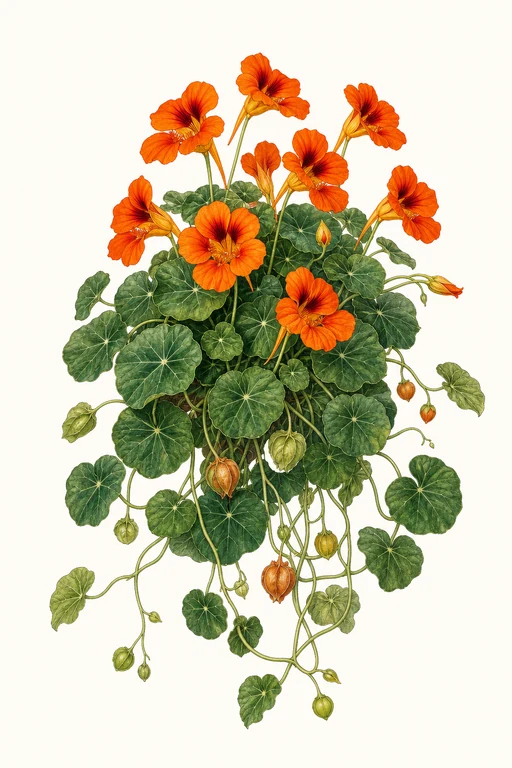
Phoenix
50d to harvest
A riot of warm, sunlit color—Phoenix nasturtium blooms with velvety, painterly petals that glow like ember-orange over lush, trailing foliage. The leaves and blossoms offer a peppery, lively bite with a crisp, tender snap, perfect for bright garnishes and vibrant flavor-forward salads, while the seeds mature for bold, tangy pickling. Grow Phoenix for a fast, showy 50-day burst of edible beauty that spills gracefully from containers or garden edges.
Crop Dates
Growing note: Frost-free Zone 12a supports continuous outdoor production.
| Milestone | Date |
|---|---|
| Climate | Frost-Free Climate |
| Growing Approach | Continuous Production |
Crop Details
| Trait | Value |
|---|---|
| Days to Maturity | 50 |
| Sun Requirements | Full Sun |
| Growth Habit | Vine |
| Support Needed | None |
| Planting Depth | Normal |
| Germination Temp (°F) | 70 |
| Min Soil Temp (°F) | 45 |
| Min Night Temp (°F) | 35 |
| Harden Off (days) | 5 |
Recommended Companions
Frequently Asked Questions
What pest or disease problems commonly affect Tropaeolum majus (nasturtium), and how can I control them?
Watch for aphids and caterpillars, which cluster on tender new growth; rinse aphids off with a strong jet of water and remove heavily infested shoots. If you see powdery white coating, treat early with a baking-soda spray (1 tablespoon baking soda per gallon of water) applied to affected leaves in the morning, and improve airflow by spacing plants and avoiding overhead watering.
How often should I water Tropaeolum majus during the main growing phase to keep it flowering?
During active growth, water when the top 1 inch of soil feels dry, then water deeply so moisture reaches the root zone. Keep the soil evenly moist but not soggy—too-wet conditions reduce flowering and invite leaf disease; in full sun heat, this often means watering about 1–2 times per week depending on your soil.