
Tall Utah
Celery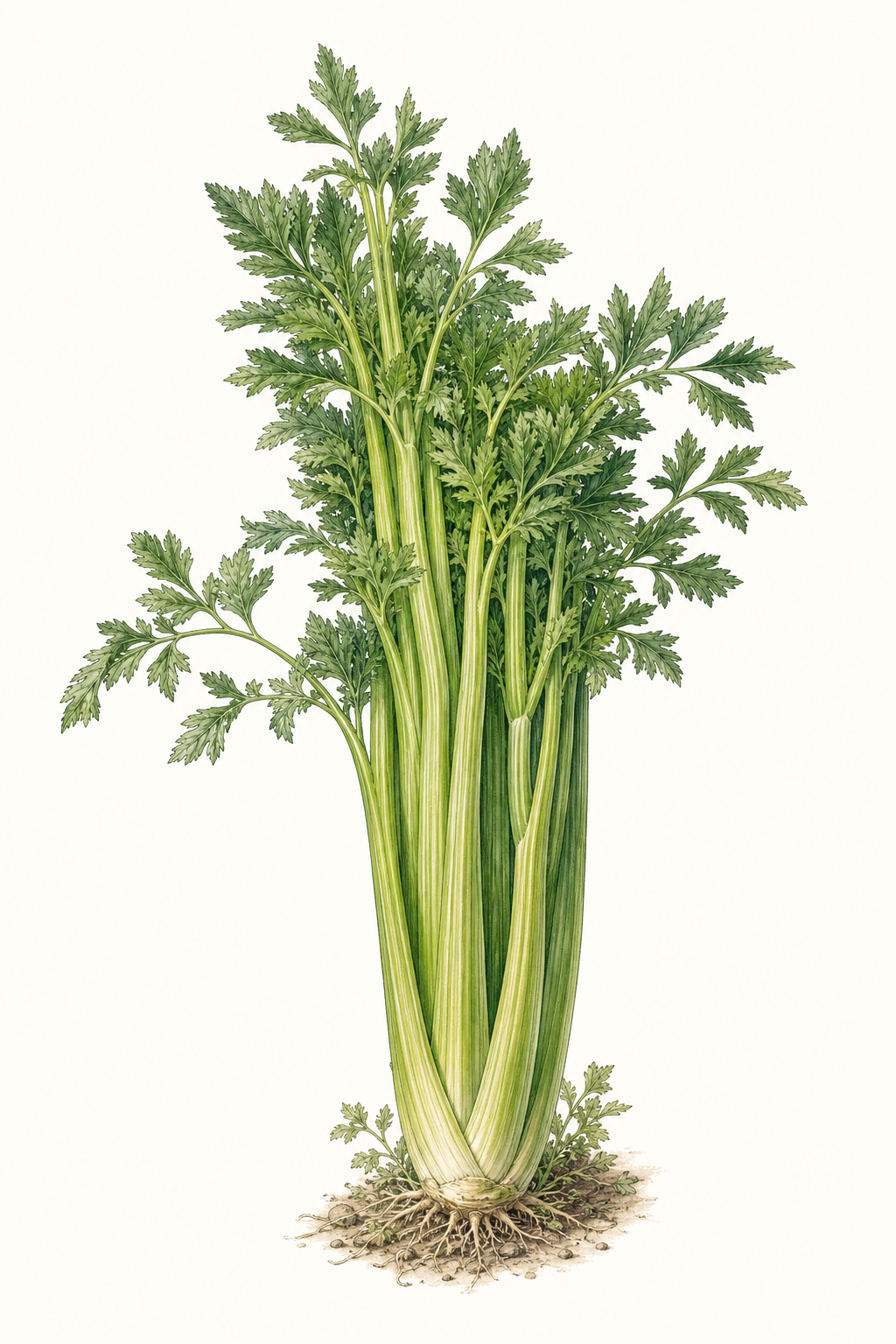
Crisp, cool stalks rise in a stately column—Tall Utah delivers a clean, bright celery flavor with a tender snap and a pleasantly …
Crop Dates
| Milestone | Date |
|---|---|
| Start Indoors | Oct 23rd |
| Last Frost | Jan 1st |
| Transplant / Sow Outdoors | Jan 1st |
| Harvest Begins | Apr 1st |
| Harvest Ends | Dec 31st |
Crop Details
| Trait | Value |
|---|---|
| Days to Maturity | 90 |
| Sun Requirements | Part Sun |
| Growth Habit | Rosette |
| Support Needed | None |
| Planting Depth | Normal |
| Germination Temp (°F) | 65 |
| Min Soil Temp (°F) | 45 |
| Min Night Temp (°F) | 35 |
| Harden Off (days) | 7 |
Recommended Companions
Frequently Asked Questions
What pest or disease is most likely to affect Apium graveolens var. dulce (sweet celery), and how can I manage it?
How often should I water sweet celery during its main growing phase?
How can I tell when tall sweet celery (Apium graveolens var. dulce) is ready to harvest?
Crisp, cool stalks rise in a stately column—Tall Utah delivers a clean, bright celery flavor with a tender snap and a pleasantly mild bite. The long, upright ribs hold their shape beautifully, making them ideal for fresh salads, classic sauces, and flavorful braises where you want celery’s signature aroma to shine. Grow it for a dependable, garden-to-table harvest that stays crisp and attractive from first cutting through the main yield.
Sowing Tips

Transplant Conditions
Wait until soil reaches 45°F and nights stay above 35°F before moving outdoors. Harden off for 7 days first.
Expert Note

Start celery early and keep soil evenly moist; thicker, blanched stalks come from gradually banking soil around plants after they’re established.