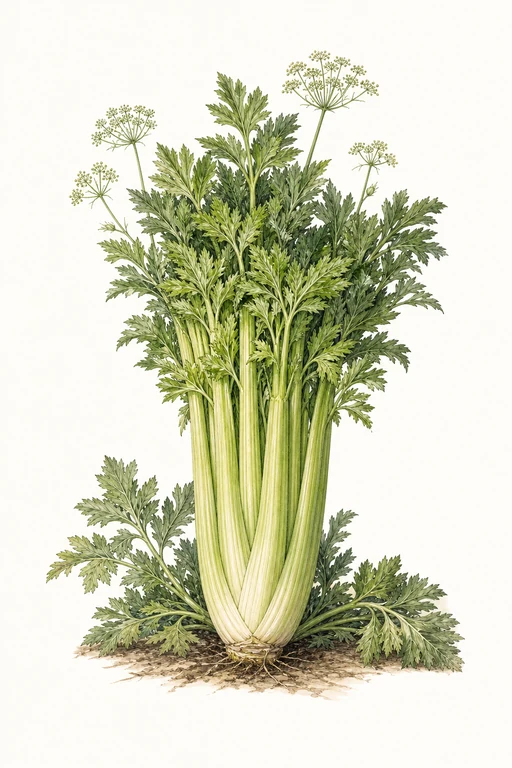
Utah 52-70 Improved
Celery
🌱 85d to harvest
Rosette
Crisp, cool stalks with a clean, celery-bright snap—Utah 52-70 Improved delivers a refined crunch and a pleasantly mild, garden-f…
Crop Dates
| Milestone | Date |
|---|---|
| Start Indoors | Oct 23rd |
| Last Frost | Jan 1st |
| Transplant / Sow Outdoors | Dec 25th |
| Harvest Begins | Mar 20th |
| Harvest Ends | Dec 31st |
Crop Details
| Trait | Value |
|---|---|
| Days to Maturity | 85 |
| Sun Requirements | Part Sun |
| Growth Habit | Rosette |
| Support Needed | None |
| Planting Depth | Normal |
| Germination Temp (°F) | 70 |
| Min Soil Temp (°F) | 45 |
| Min Night Temp (°F) | 35 |
| Harden Off (days) | 6 |
Recommended Companions
Frequently Asked Questions
What’s the most common disease/pest issue for sweet celery (Apium graveolens var. dulce), and how do I treat it?
Celery is especially prone to Septoria leaf spot, which shows as small brown spots on older leaves that can spread in humid weather. Remove and destroy infected foliage, improve airflow (don’t crowd plants), and water at the soil line rather than overhead. If the spotting continues, use a labeled fungicide for leaf spot on celery and restart at 7–10 day intervals as directed on the label.
How often should I water sweet celery during its main growth phase, and what soil moisture level should I maintain?
During the main growth phase (after seedlings establish and through most of the 85-day season), keep soil consistently moist but not waterlogged. Water deeply about 1–2 times per week, adjusting to heat so the top 1 inch of soil stays damp; hot, windy spells may require more frequent watering. Avoid letting beds dry out and then flood, which can contribute to bitterness and hollow, stressed growth in celery.
How can I tell when ‘Utah 52-70 Improved’ sweet celery is ready to harvest?
Harvest when plants have firm, well-developed stalks that are full length for the variety and about 85 days from transplanting (or roughly the stated days to maturity from sowing, depending on your timeline). Look for stalks that snap slightly and feel crisp, not rubbery, with leaves that remain green and upright. If stalks are thin or easily bend, give them more time before cutting near the soil line.